- Home
- Authors, Books & Conversations
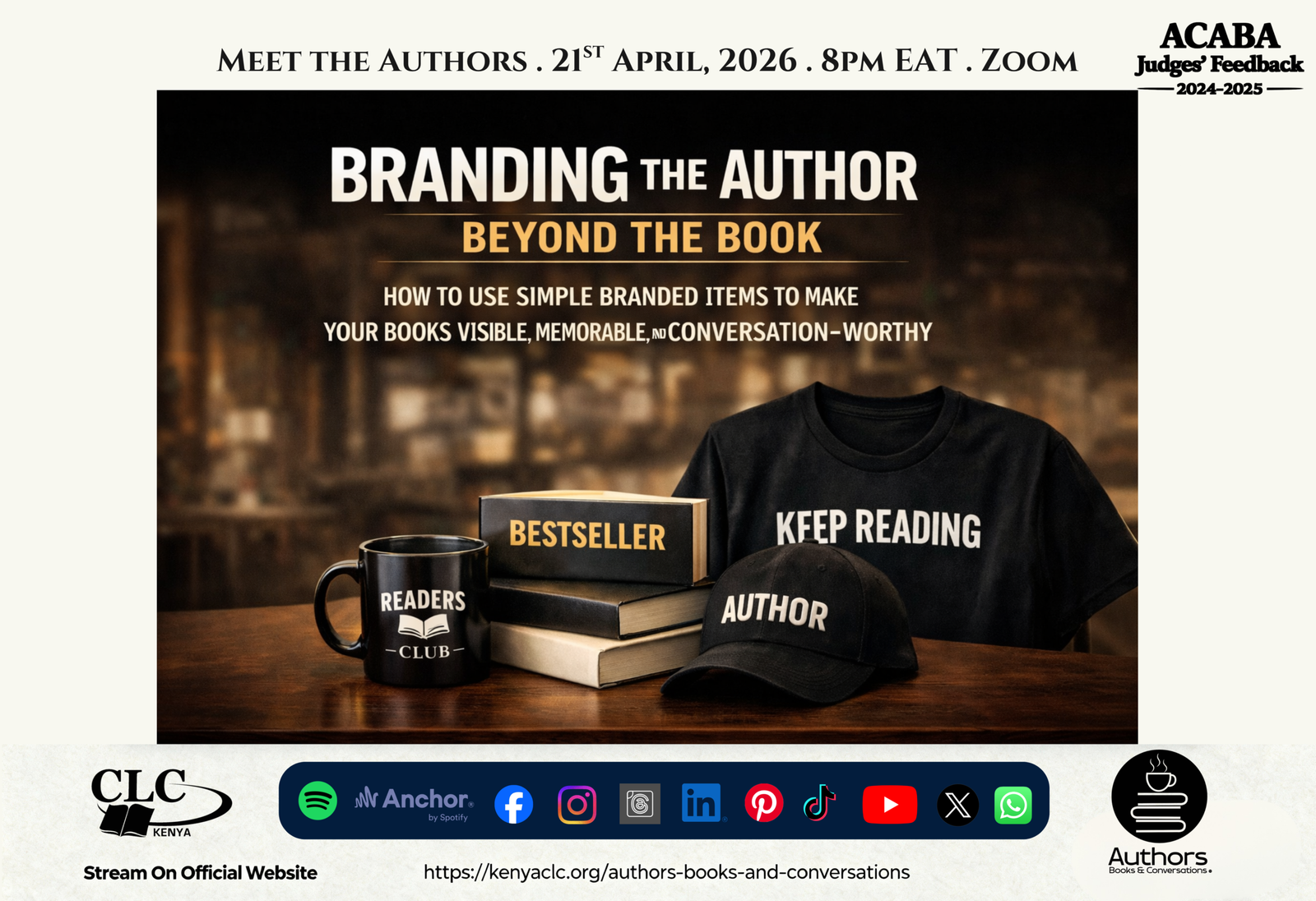
- Branding the Author Beyond the Book: How to use simple branded items to make your books visible, memorable, and conversation-worthy
Featuring: Richard Mwebesa (Uganda), Mabel Masigale (Zimbabwe), Titus Otieno (Kenya), Nancy Mwabili (Kenya), Zihnle Ramashala (South Africa), Dr. Onkeme Letshwiti (Botswana), George Oyuga (Kenya), Melody Banda (Zimbabwe), and Rev. Patrick Makewa (Kenya)
Register in Advance
Registration closes 1 minute to the set time on the D-day.
Register on ZoomTip: If you don’t see the email, kindly check Promotions/Spam.
Authors, Books & Conversations
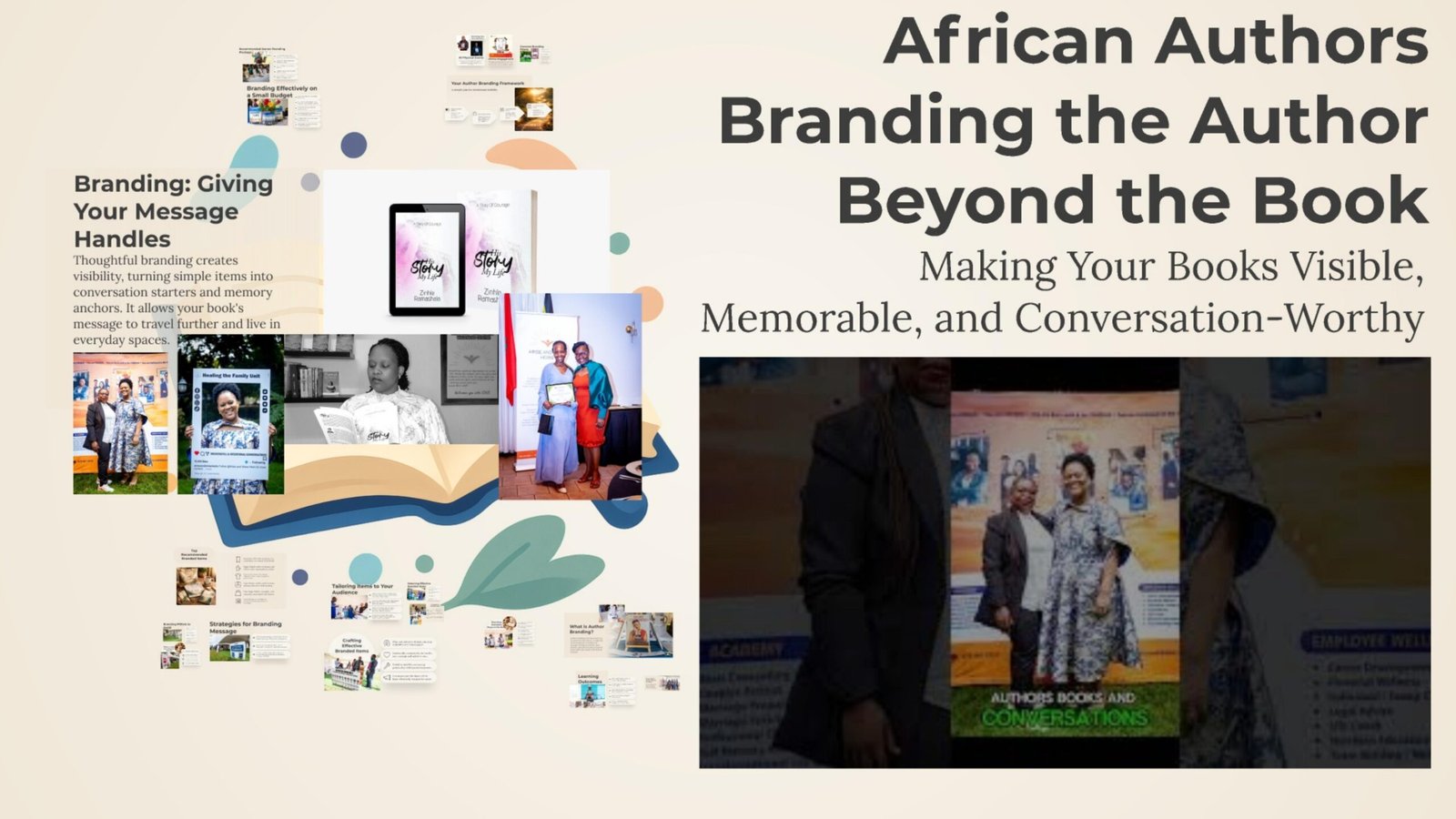
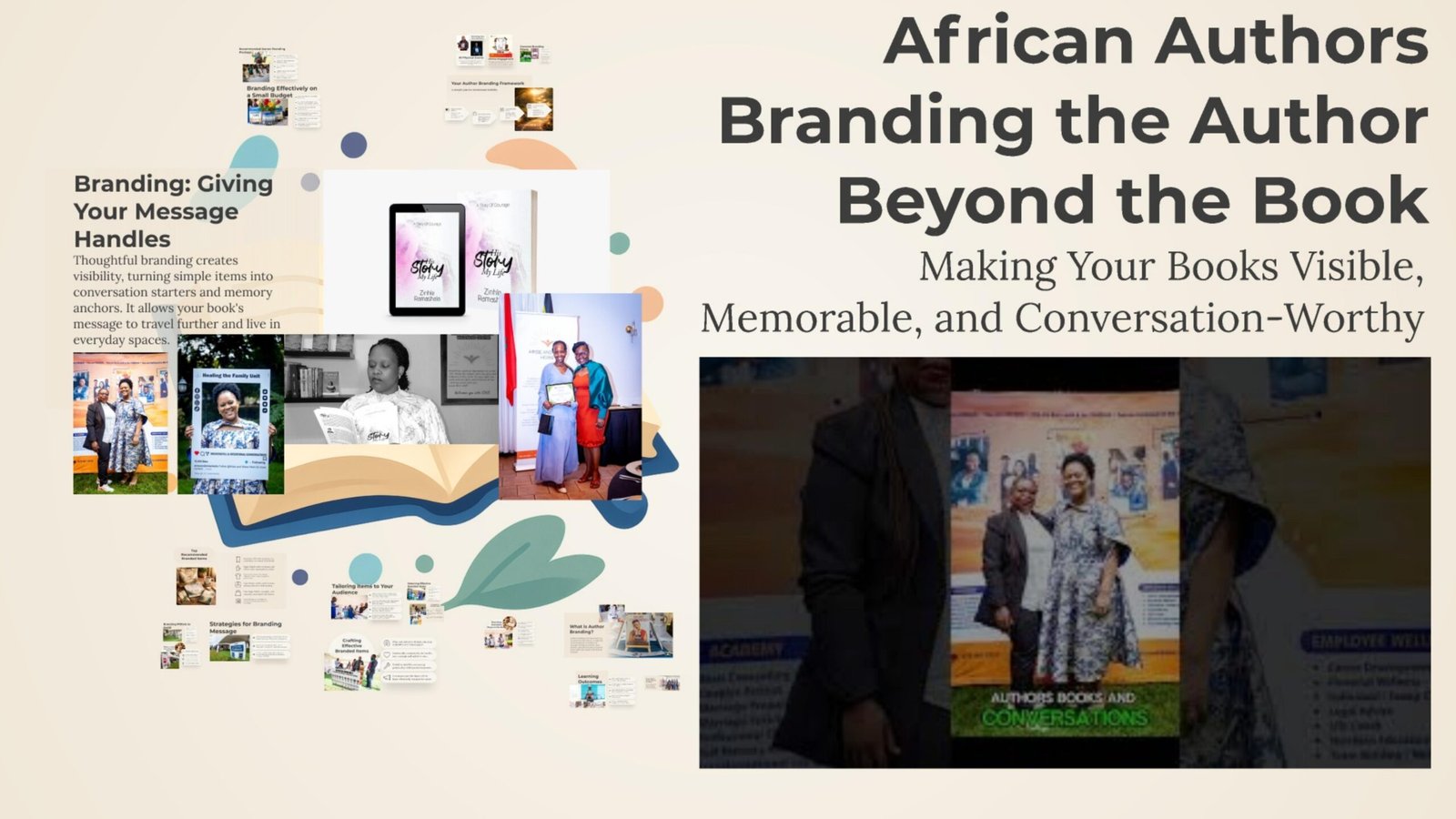
Branding the Author Beyond the Book
Writing the book is a major step, but visibility does not happen automatically. This session explores how authors can use simple branded items such as cups, caps, T-shirts, bookmarks, tote bags, and notebooks to extend the reach of their books and keep their message visible beyond the launch.
Whether you are a new author or a seasoned writer, this conversation will help you think practically about author branding, message visibility, and how to create memorable connections that make your books easier to notice, remember, and talk about.
Ready to explore the training content?
Jump to the content below and continue the conversation from there.
Watch below
Click the poster to start the video player
Well Branded Books
Branding the Author Beyond the Book: How Simple Branded Items Can Make Your Books Visible, Memorable, and Conversation-Worthy
EPISODE SPONSORS
Today’s episode is proudly sponsored by CLC Kenya.
Welcome to Authors, Books & Conversations by CLC Kenya
the podcast that celebrates the power of storytelling, the beauty of literature, and the impact of Christian authorship. I am your host, Dr. Muthoni Omukhango, and I am delighted to take you on a journey through some of the most inspiring books featured in the African Christian Authors Book Award (ACABA).
Today’s episode is both practical and eye-opening. We are talking about books, yes—but we are also going beyond the book itself to explore what it means to make an author’s message visible, memorable, and conversation-worthy in everyday life.
Our theme is: Branding the Author Beyond the Book.
In this conversation, we will be hearing from authors who are using simple branded items such as cups, caps, T-shirts, and other creative tools to extend the reach of their books and strengthen awareness around their message.
Now, this is where it becomes especially interesting. Writing the book is a major achievement—but visibility does not happen automatically. A good book can remain hidden if it is not intentionally presented, carried, and talked about. In today’s world, authors must think beyond printing and ask how their message can continue to live in homes, at events, online, and in everyday conversations.
So today we will be exploring what it means to brand the author beyond the book in ways that are thoughtful, practical, and authentic:
How do you use simple branded items to help your book stay visible beyond the launch?
How do you create items that reflect the heart of your message rather than becoming empty merchandise?
How do you build awareness in a way that feels natural, memorable, and true to your voice as an author?
And how can authors start small, use what they have wisely, and still make a meaningful impression?
Because a book is not only meant to be printed. It is meant to travel. It is meant to spark curiosity, open conversations, and create lasting connection. And let us be honest: many authors have powerful messages, but they are not always sure how to keep those messages visible once the excitement of the launch begins to settle. This session is here to provide practical ideas, fresh perspective, and real encouragement.
Stay with us as we unpack this important conversation with authors who are finding creative ways to help their books move beyond the page and into everyday life.
Now, let’s dive in.
“A book may carry the message, but branding helps it travel.”
ACABA by CLC Kenya is a program that recognises, celebrates and promotes African Christian authors whose works inspire, equip, and transform lives. Each year, a panel of judges carefully evaluates submissions based on originality, Biblical alignment, relevance, and literary excellence. In this special episode, we will review five outstanding books, highlighting their impact and the judges’ feedback. Join me as we dive into these literary treasures!
African Books With Great Brading Strategy
Why Are African Books & Conversations Important Today?
African books and the conversations surrounding them are more important than ever in today’s world to Preserve and Celebrate African Stories: For centuries, Africa’s rich oral traditions, history, and wisdom have been passed down through storytelling. Now, books serve as an extension of that legacy, capturing authentic African experiences and ensuring they are not lost. African literature provides a unique lens through which we understand our past, navigate our present, and shape our future as we draw our continent to God!
tags : Book Branding, Award Winners, African Books, ACABA Judges Feedback, Great Reads
socials :
Why This Conversation Matters
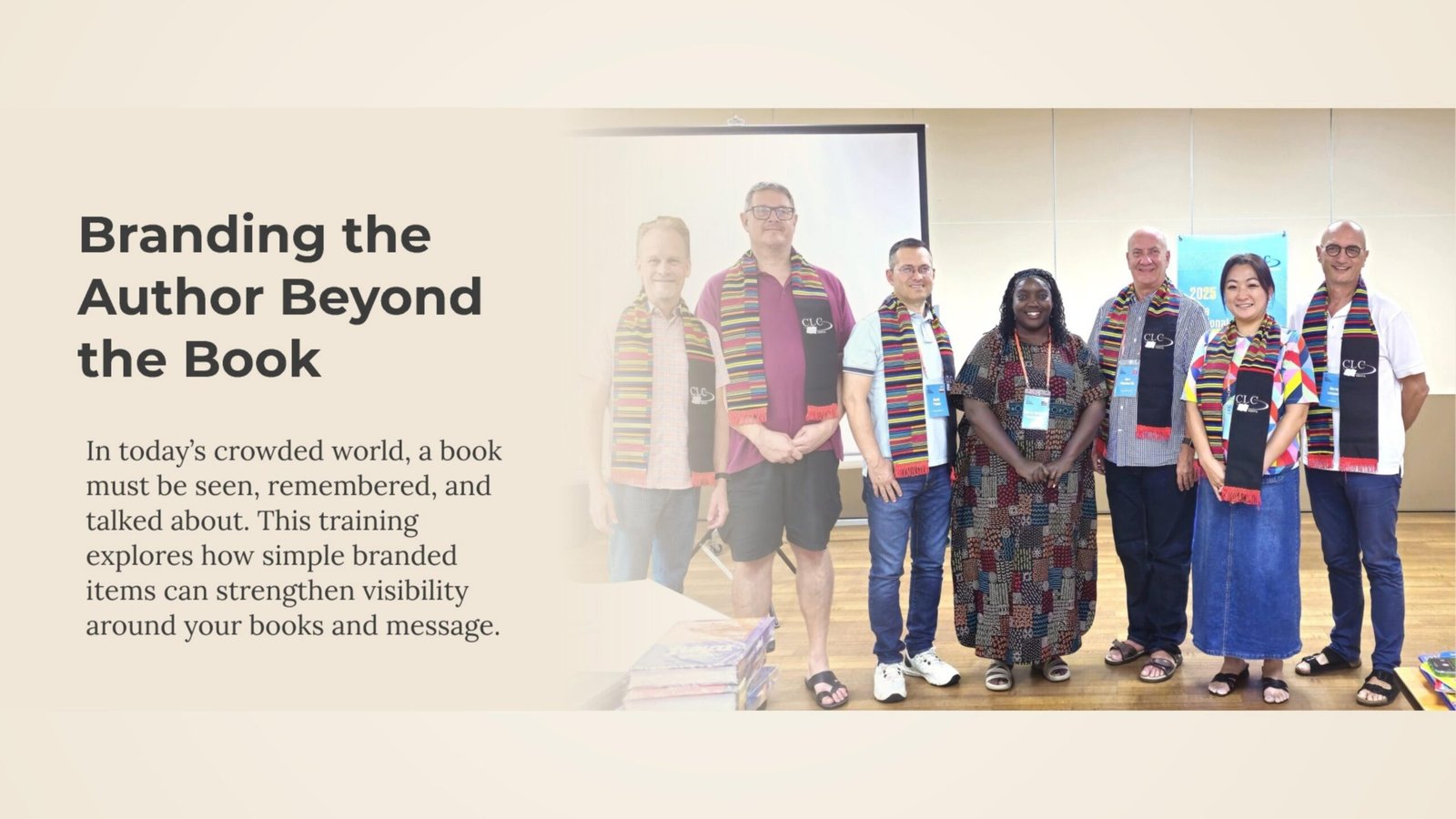
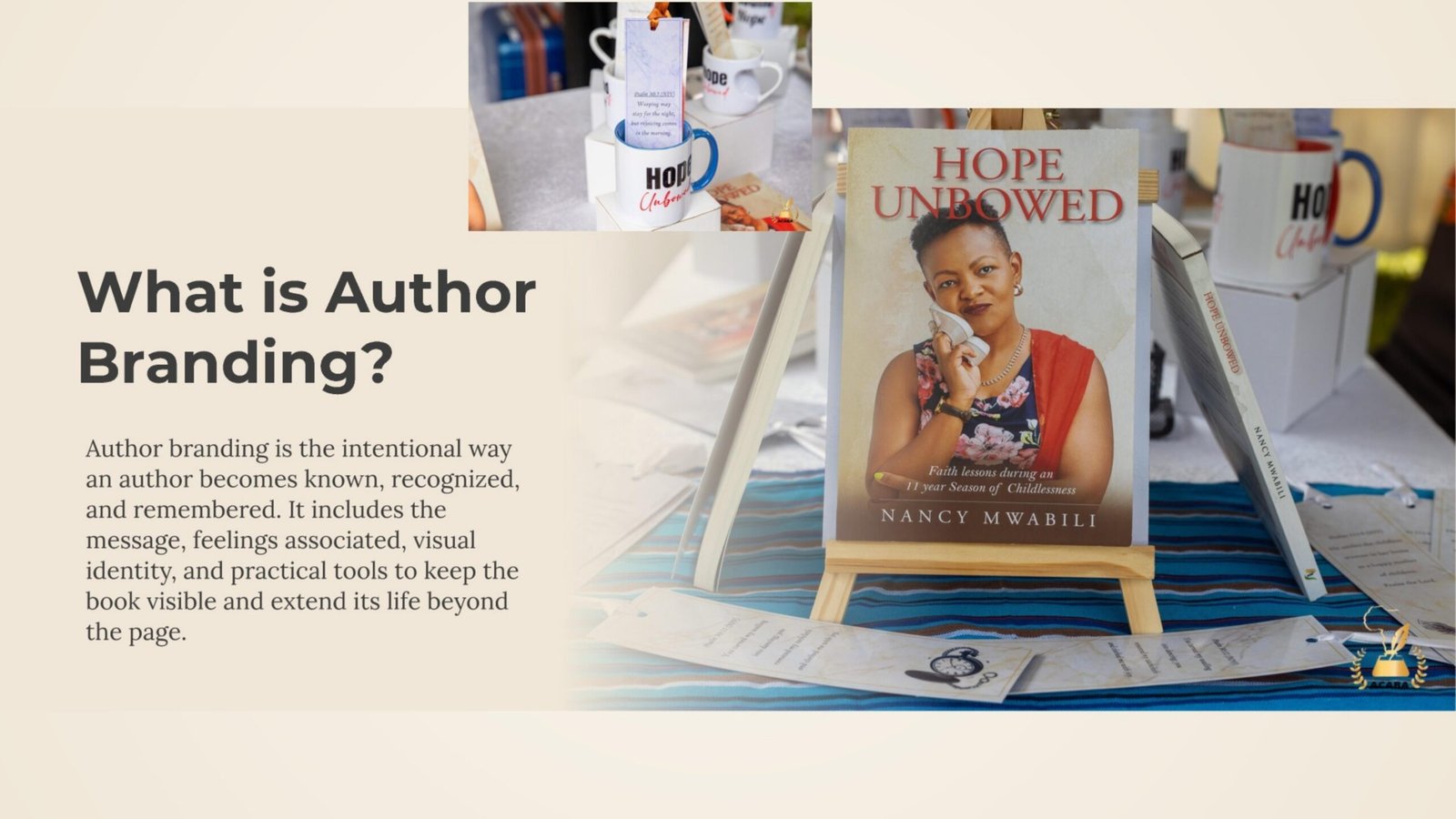
In a world where many books are published every day, writing and printing the book is only part of the journey. The next challenge is visibility. How do you help people notice your book, remember it, talk about it, and connect it to your message? That was the heart of our recent training on Branding the Author Beyond the Book.
Looking Beyond the Book Cover
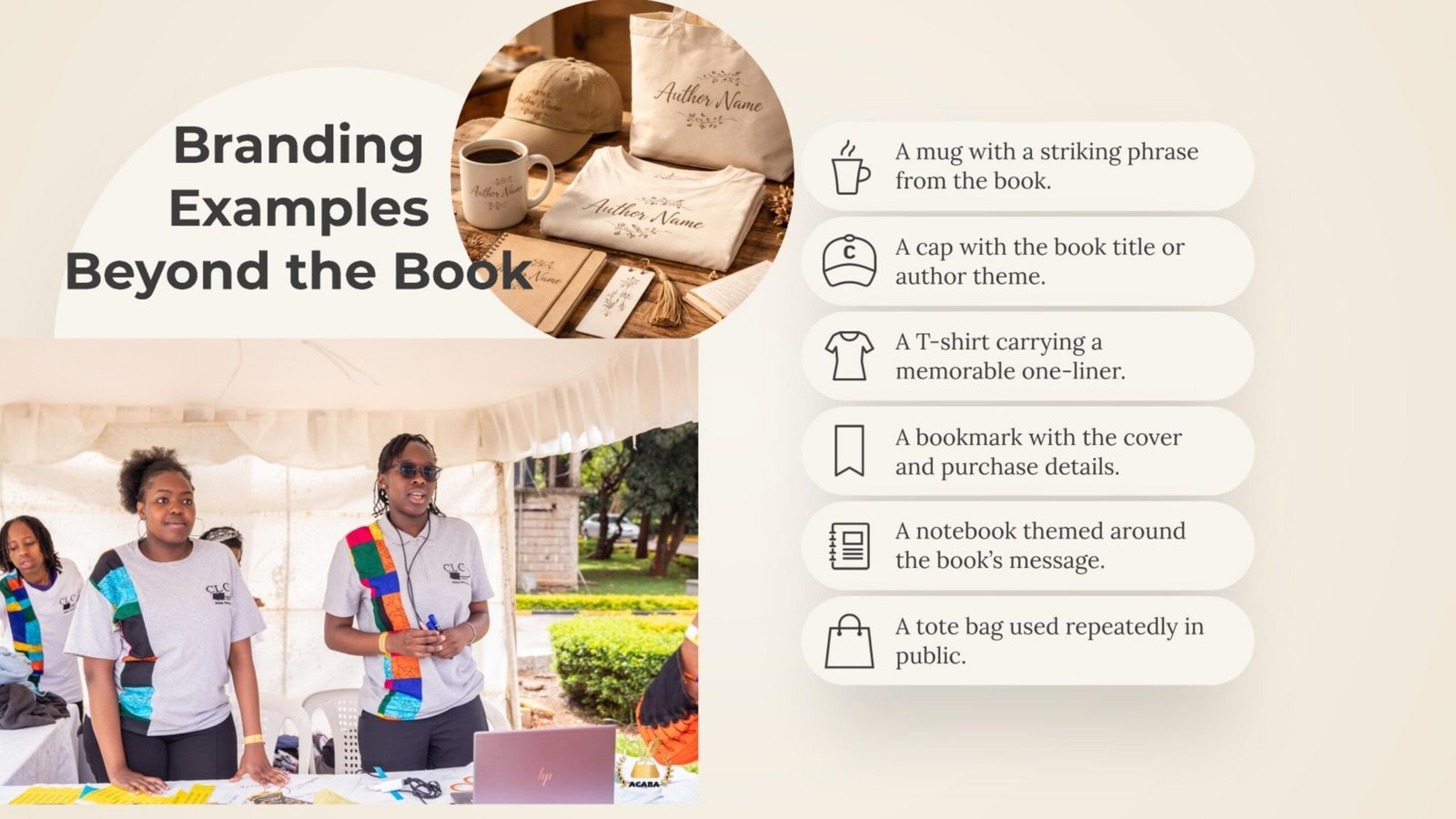
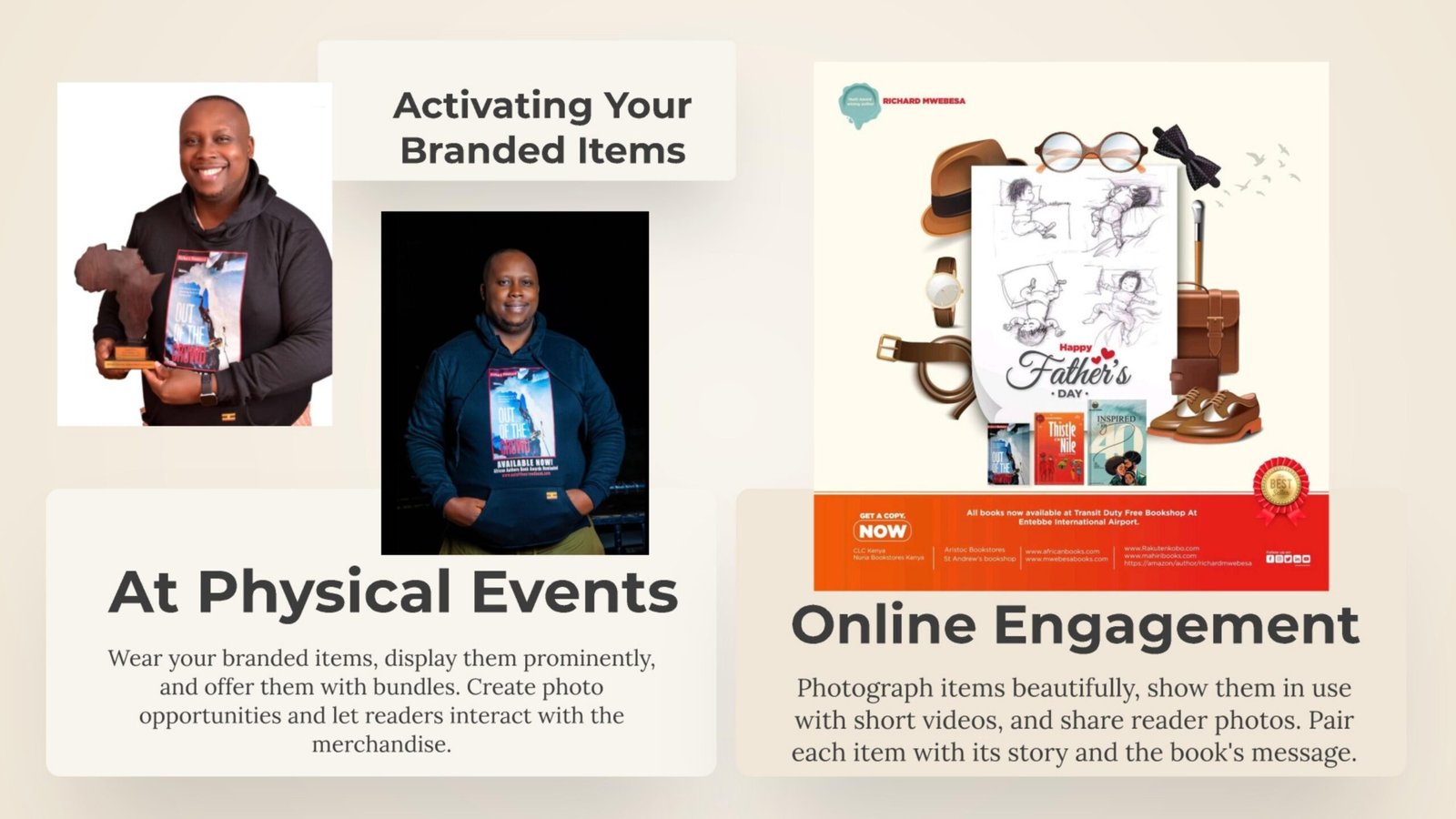
This session was designed to help authors think beyond the book cover and consider how simple branded items can strengthen awareness around their work. From cups and caps to T-shirts, bookmarks, tote bags, notebooks, and stickers, these everyday items can become practical tools for visibility when used with wisdom and intention. We explored how branding is not about noise, vanity, or simply putting a logo everywhere. It is about helping the book travel further and giving the message more opportunities to be seen, remembered, and discussed.
Why Visibility Matters
One of the strongest truths from the training was this: people may forget a title quickly, but they often remember what they saw, held, wore, or talked about. A book may be excellent, but if it is not visible, its reach can remain limited. Branded items can help extend the life of a book beyond the page. A mug on a desk, a cap at an event, a shirt in a photograph, or a bookmark in a Bible can all quietly keep the author’s message alive in everyday spaces.
How Branded Items Help Authors
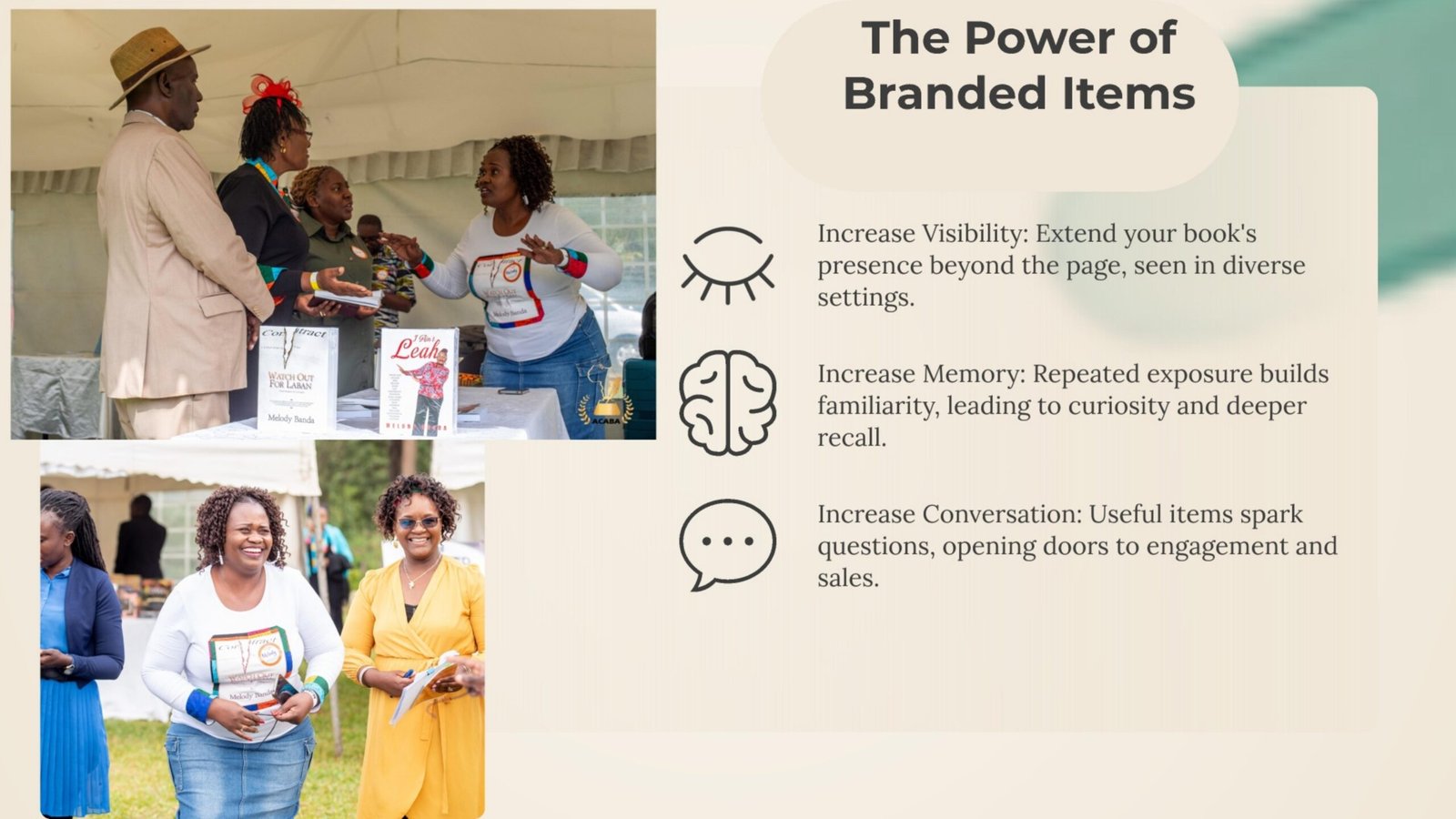
We also reflected on why branded items matter. They increase visibility, because they appear in places where books themselves may not always be present. They increase memory, because repeated exposure to a phrase, colour, or message helps the book become familiar. And they increase conversation, because a meaningful branded item often prompts questions: What does that mean? Is that from your book? Where can I get it? That simple curiosity can open the door to a sale, a testimony, an invitation, or a ministry moment.
Choosing the Right Branded Items
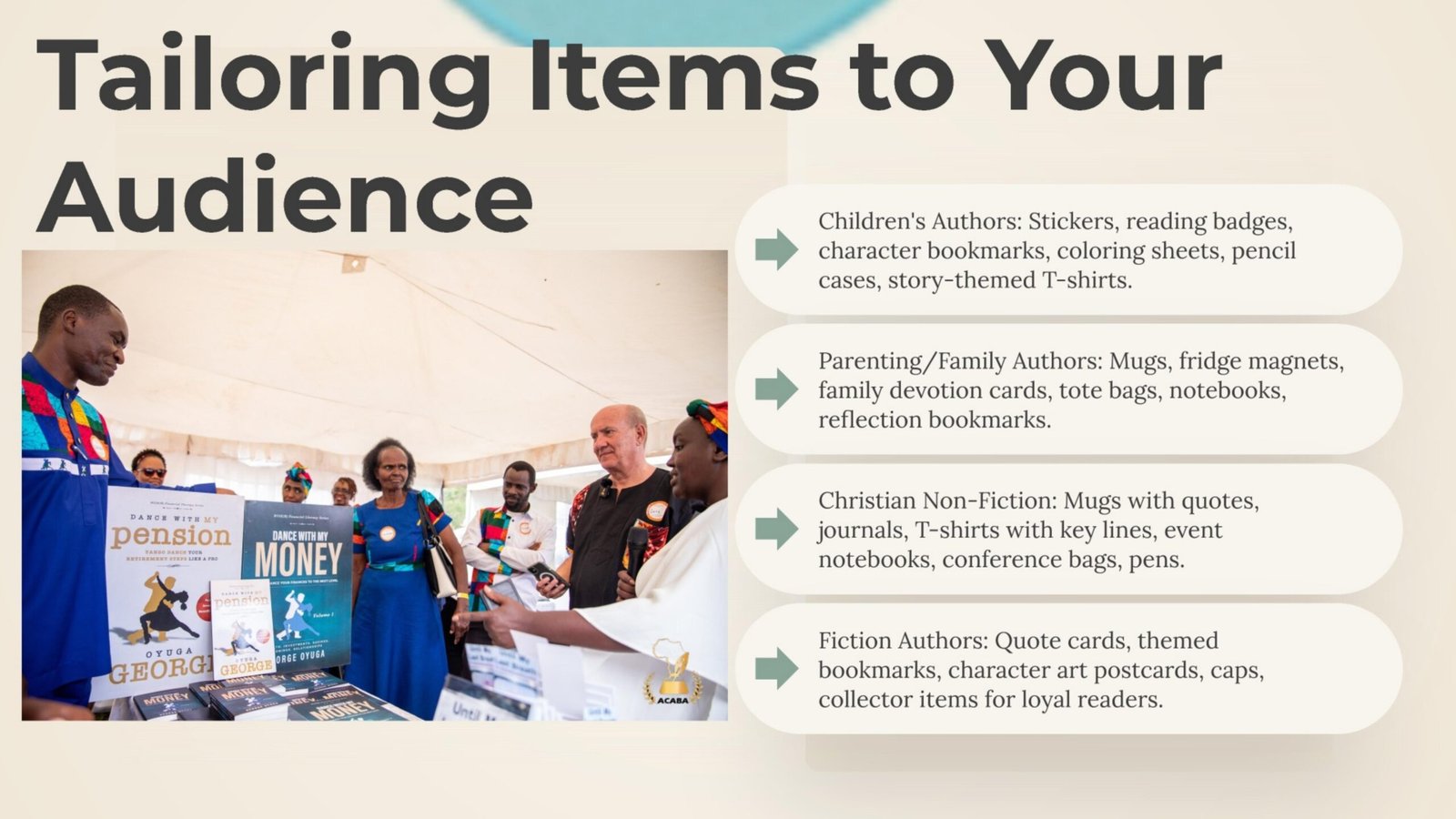
A major part of the training focused on choosing the right items. Not every author needs the same products. Branding must fit the audience, the book’s message, and the available budget. Children’s authors may benefit from stickers, reading badges, colouring sheets, and themed T-shirts. Parenting and family authors may find mugs, tote bags, notebooks, and devotion cards more useful. Christian non-fiction authors may do well with journals, pens, bookmarks, and quote-based merchandise, while fiction authors may prefer postcards, quote cards, collector items, and character-themed products. The key lesson was simple: a cup is not just a cup, a shirt is not just a shirt, and a cap is not just a cap. Each item must carry meaning.
From Merchandise to Message
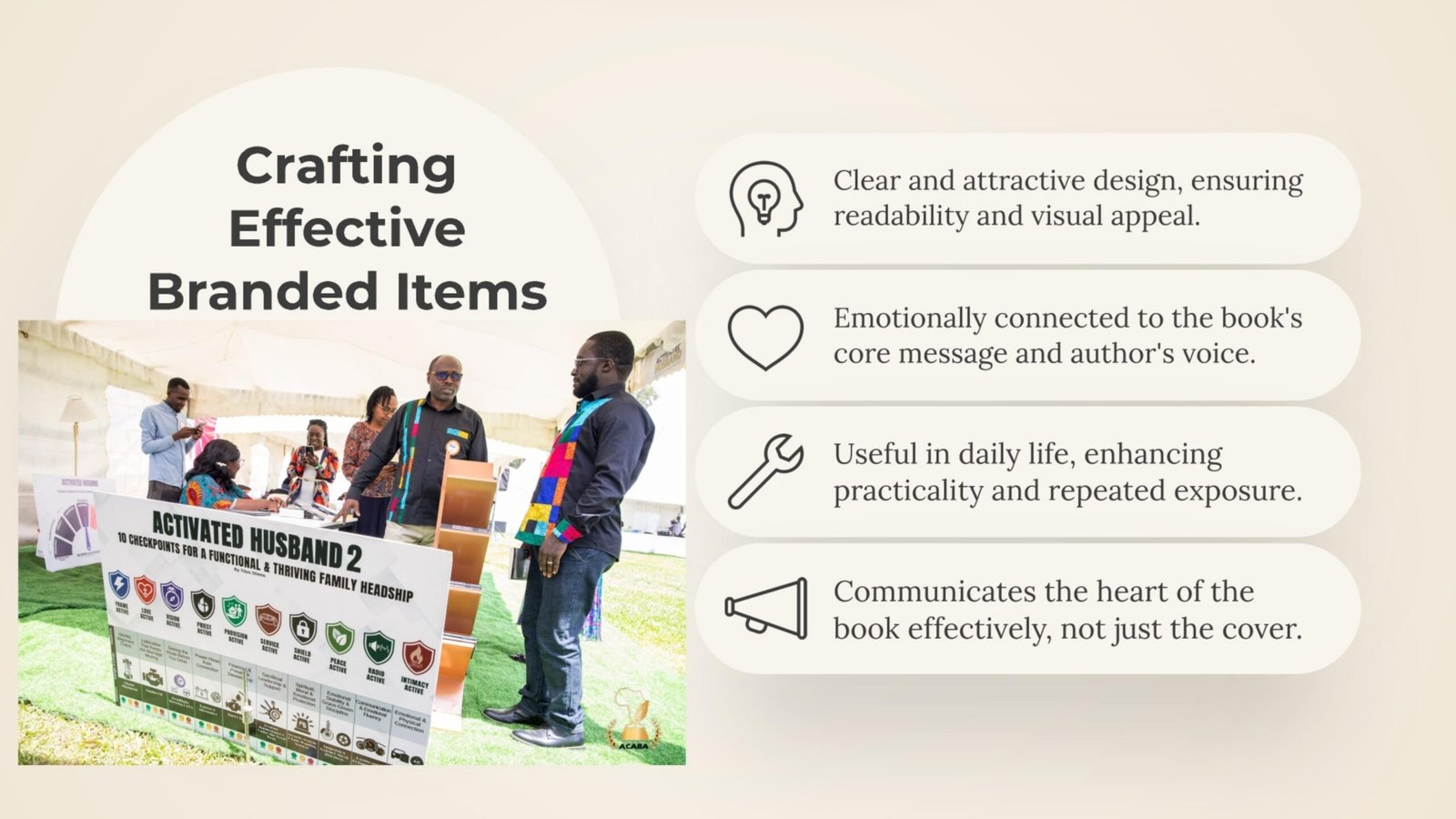
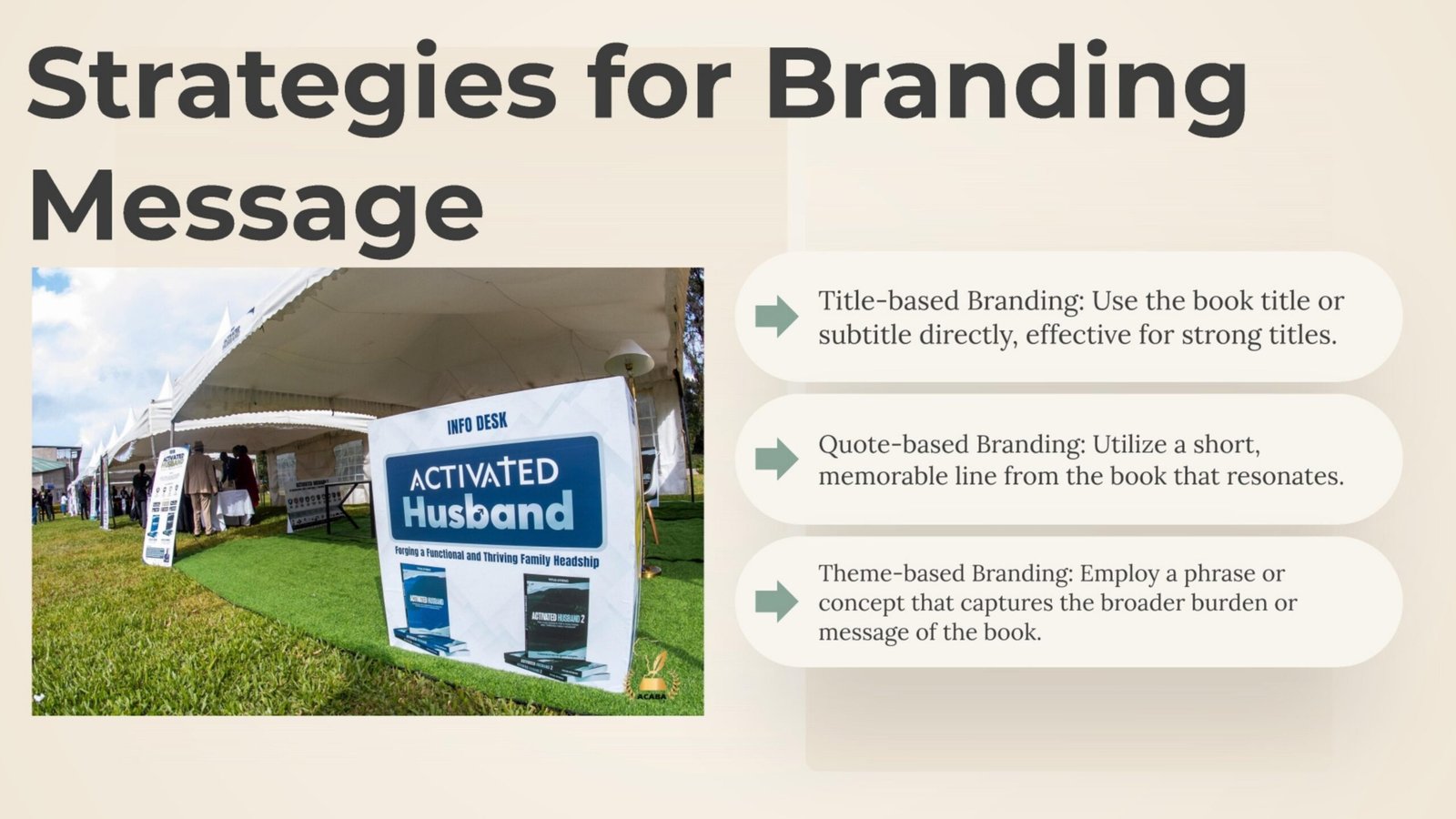
Another important discussion centred on moving from merchandise to message. Many authors are tempted to put their full cover on everything, but the session challenged participants to think more deeply. The most effective branded items are clear, attractive, useful, emotionally connected to the book, and true to the author’s voice. We looked at three helpful approaches: title-based branding, quote-based branding, and theme-based branding. Sometimes a strong title works best. Sometimes a short memorable line from the book creates more impact. Sometimes a broader theme such as healing, faith, family discipleship, or courageous parenting becomes the most powerful anchor for visibility.
The Most Useful Starter Items
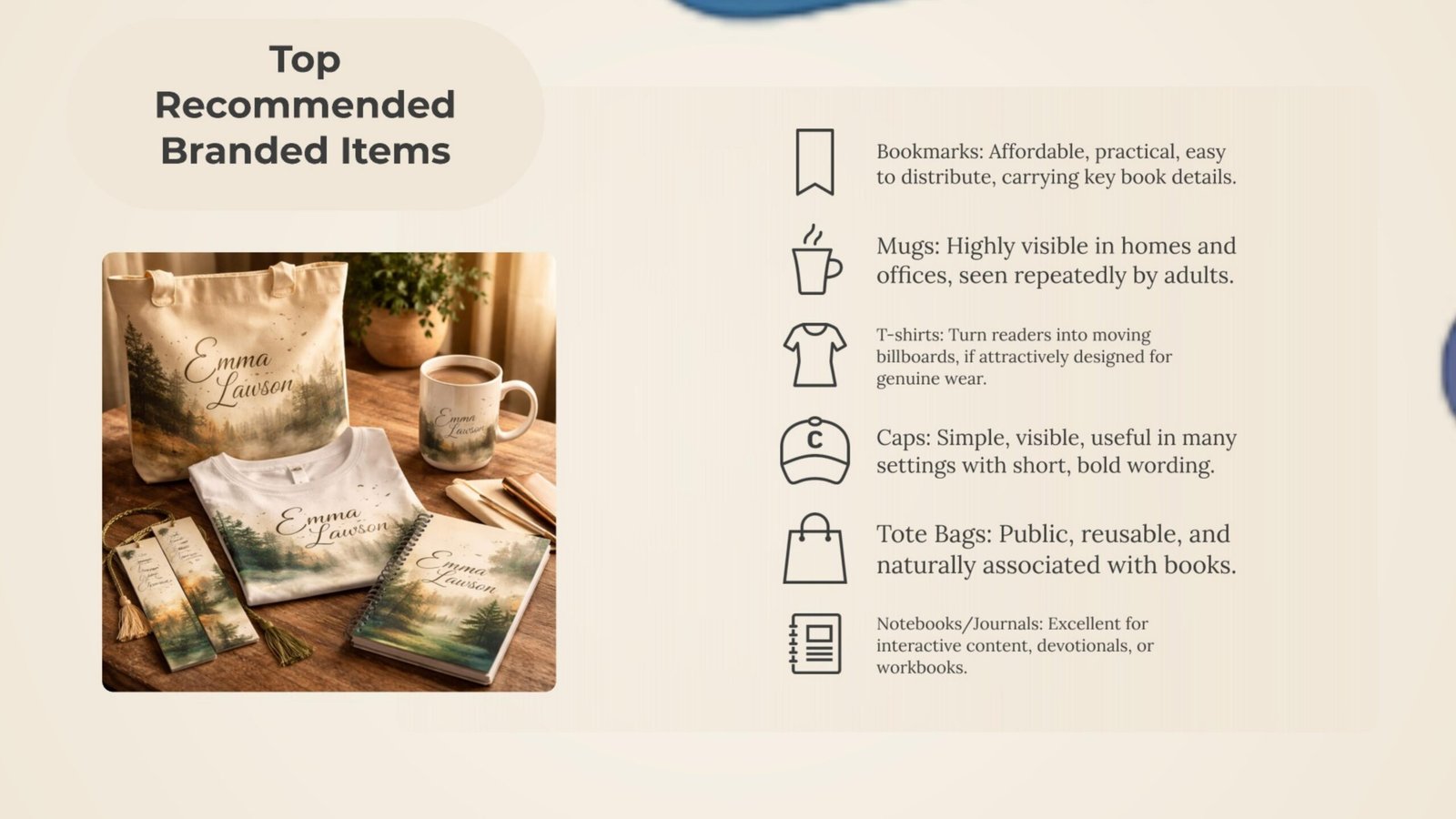
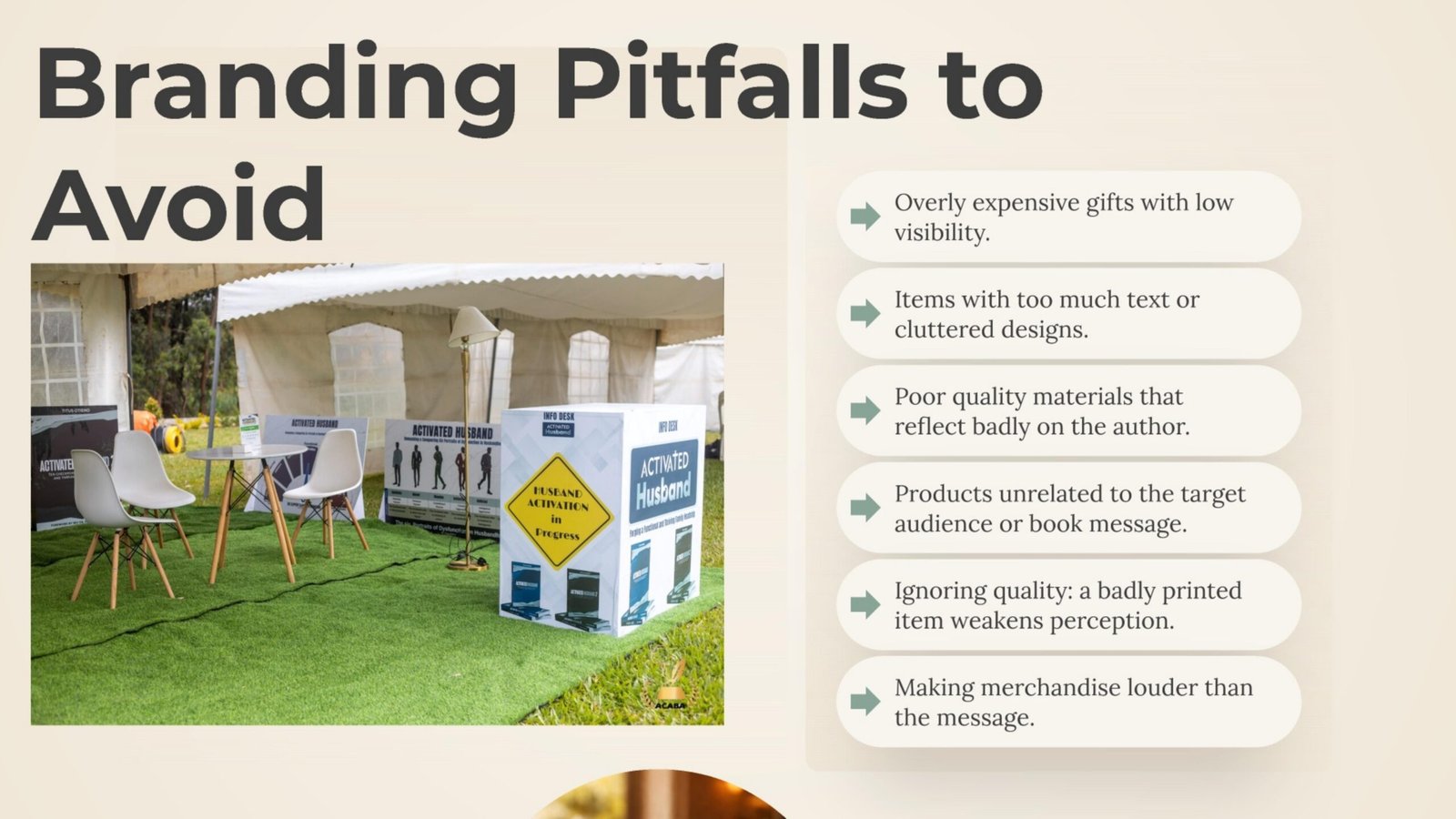
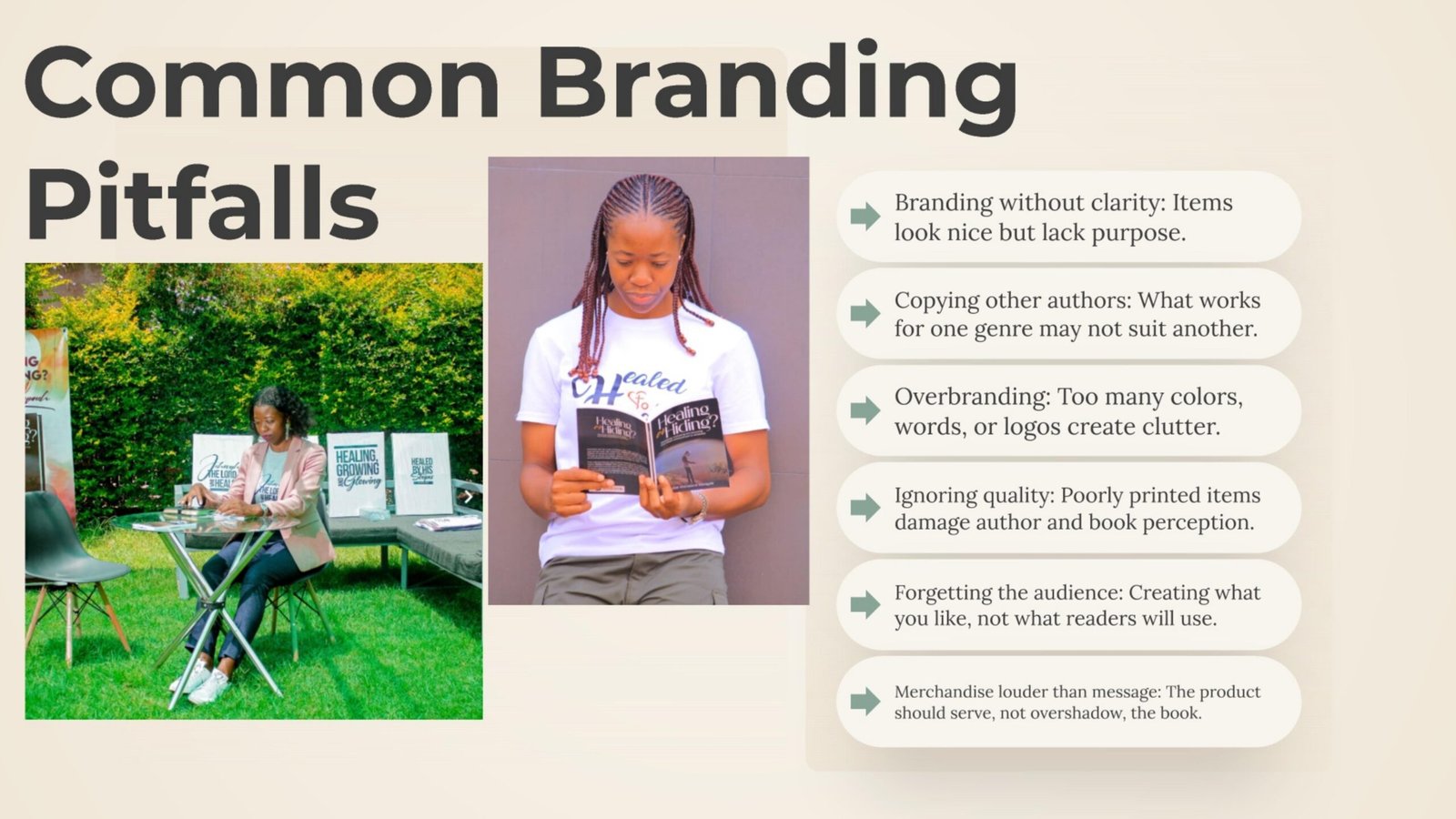
The training also highlighted some of the most useful beginner items for authors. Bookmarks remain one of the most affordable and practical tools. Mugs offer repeated visibility in homes and offices. T-shirts can turn a reader into a walking conversation starter when designed well. Caps work especially well when the wording is short and bold. Tote bags offer public, repeat visibility, while journals and notebooks are especially fitting for devotional, leadership, and reflective content. At the same time, authors were cautioned against poor-quality products, cluttered designs, overly expensive items with little visibility, and branding choices that have no real connection to the audience.
What Makes an Item Conversation-Worthy
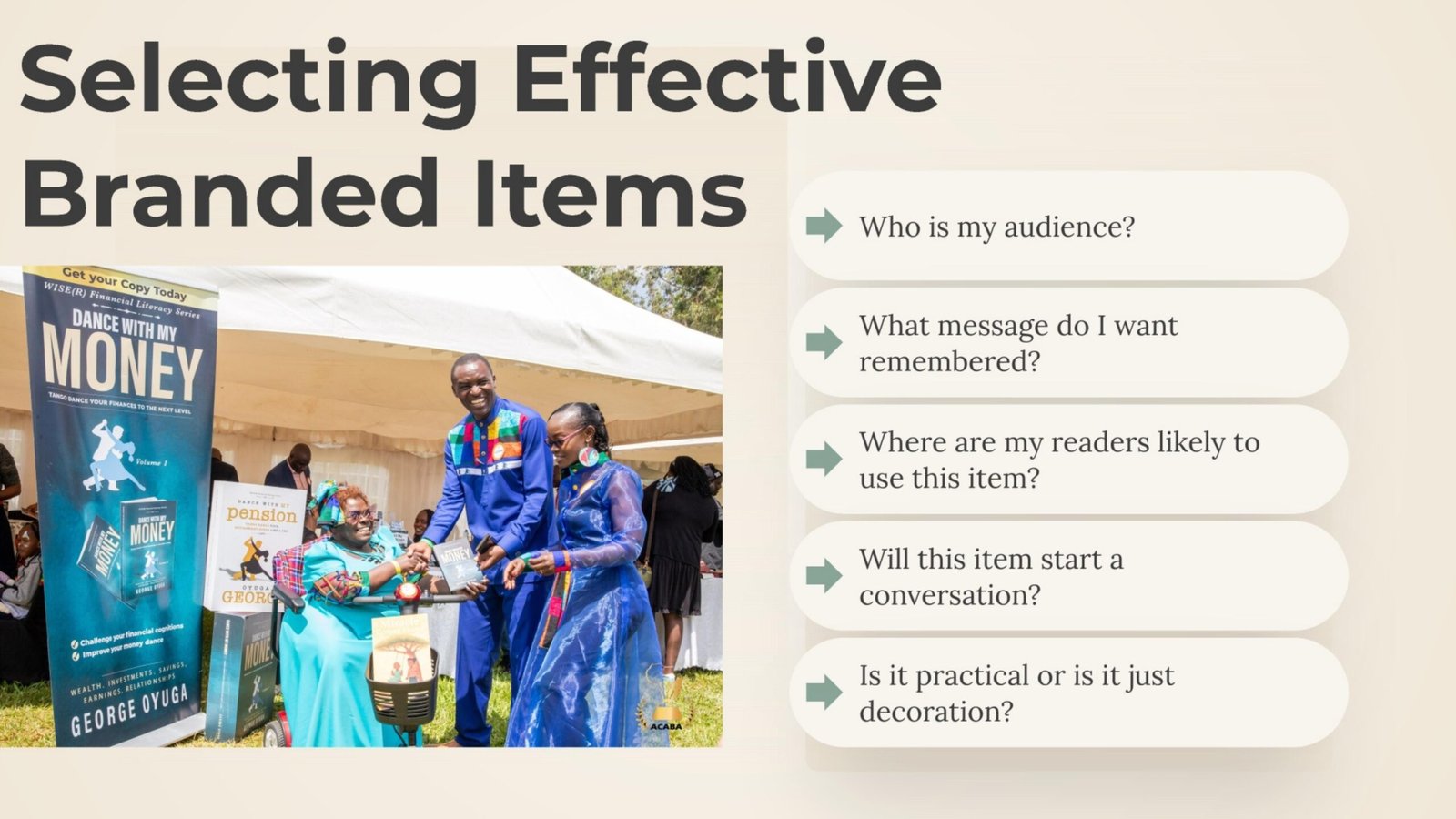
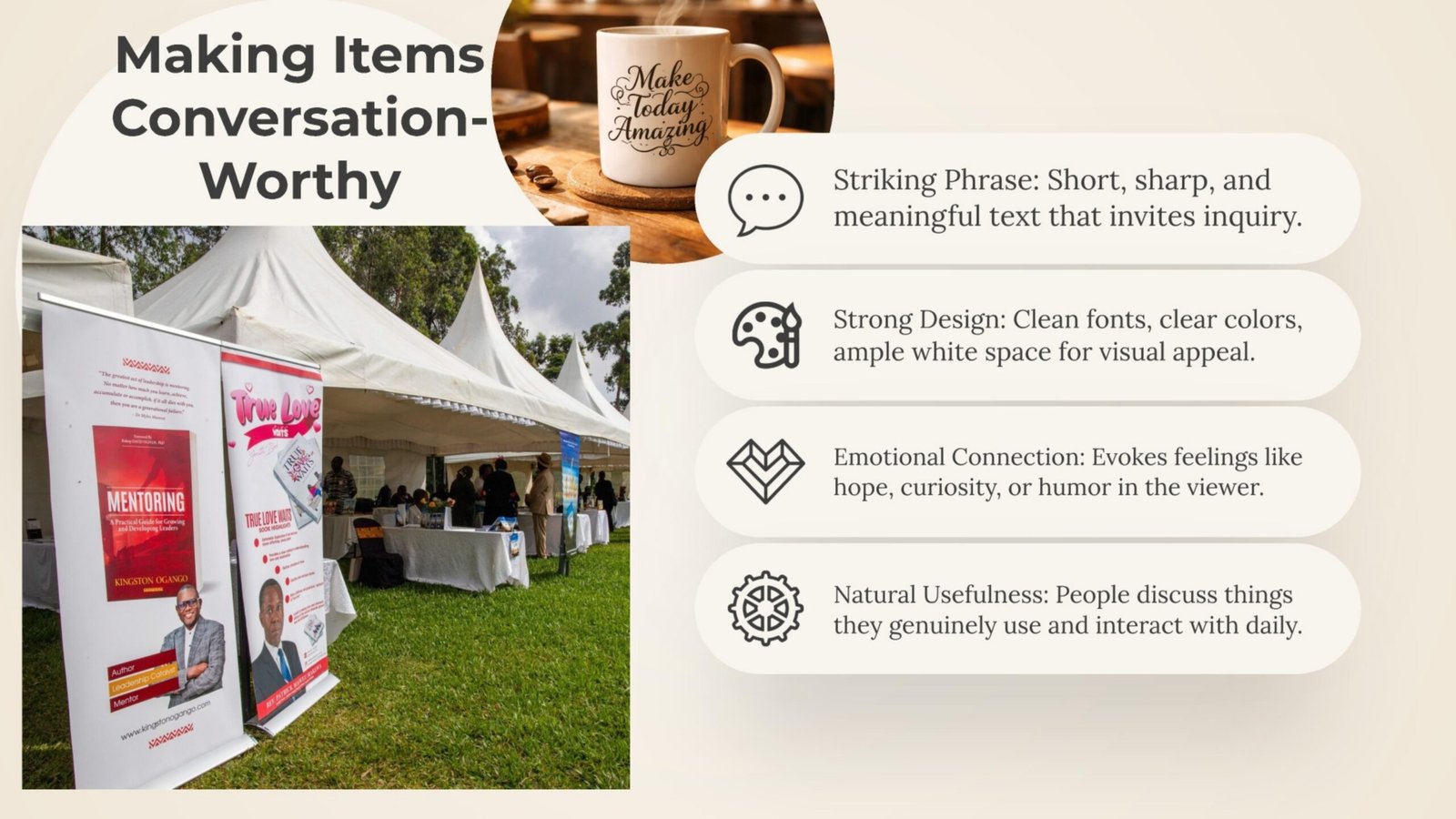
One especially practical section asked authors to consider what makes an item conversation-worthy. A branded product should not merely look nice; it should make someone ask a question. Strong phrases, clean design, emotional resonance, and usefulness all matter. Instead of printing too much text or covering every surface with the book cover, authors were encouraged to use fewer words, stronger wording, and more thoughtful placement. The test was simple: Would a stranger naturally ask me about this? If not, the branding might need more work.
Branding on a Small Budget
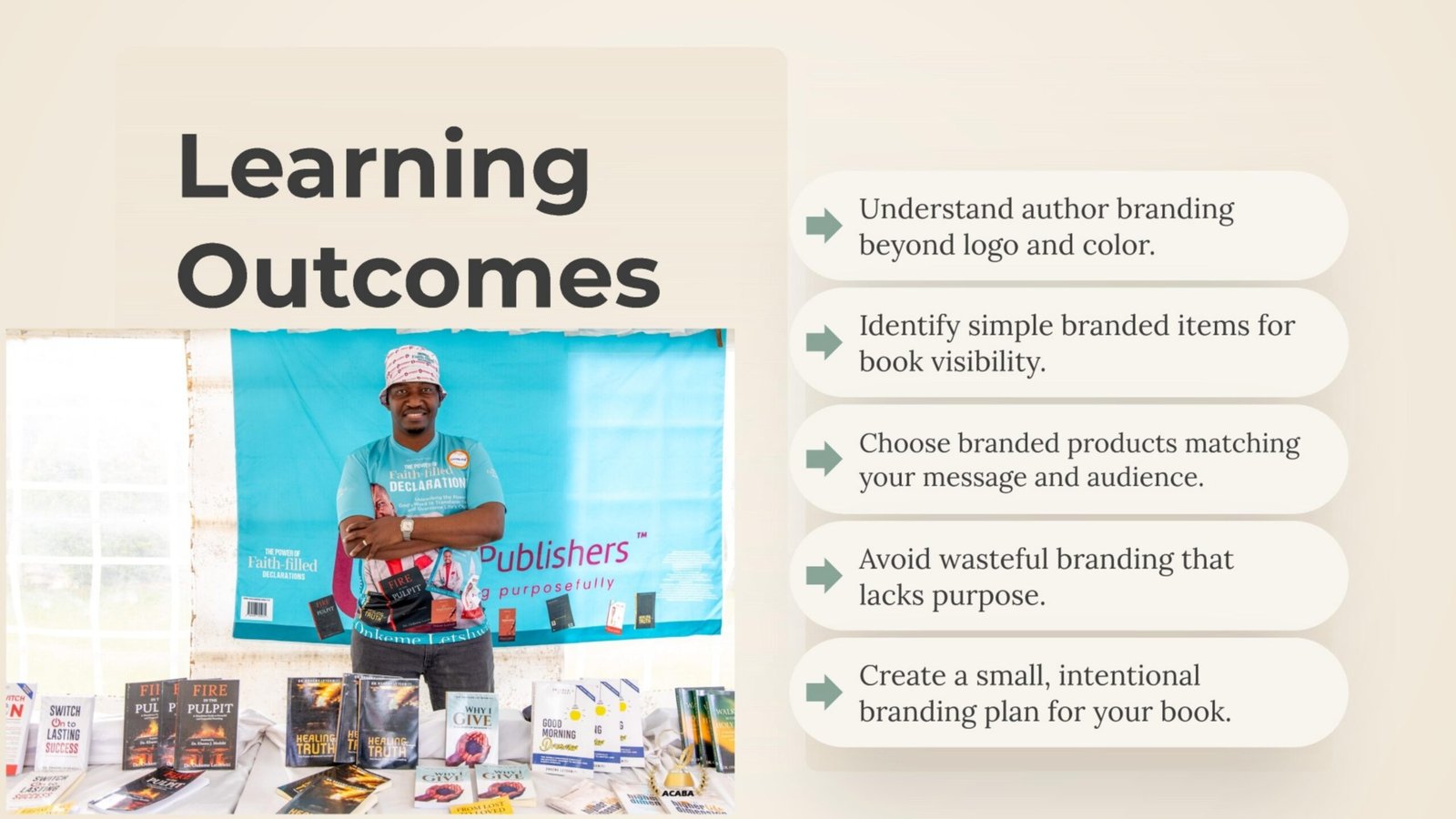
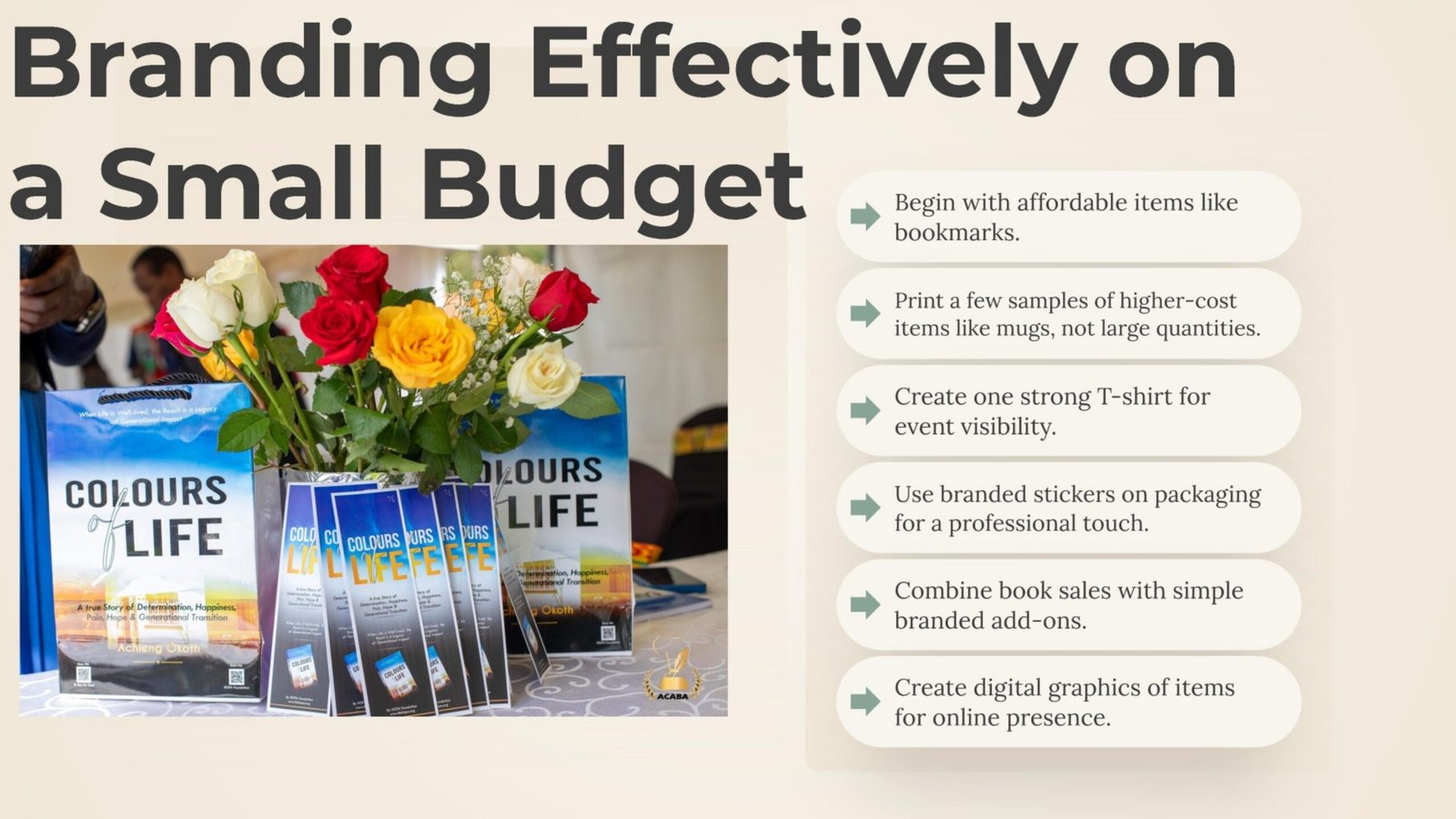
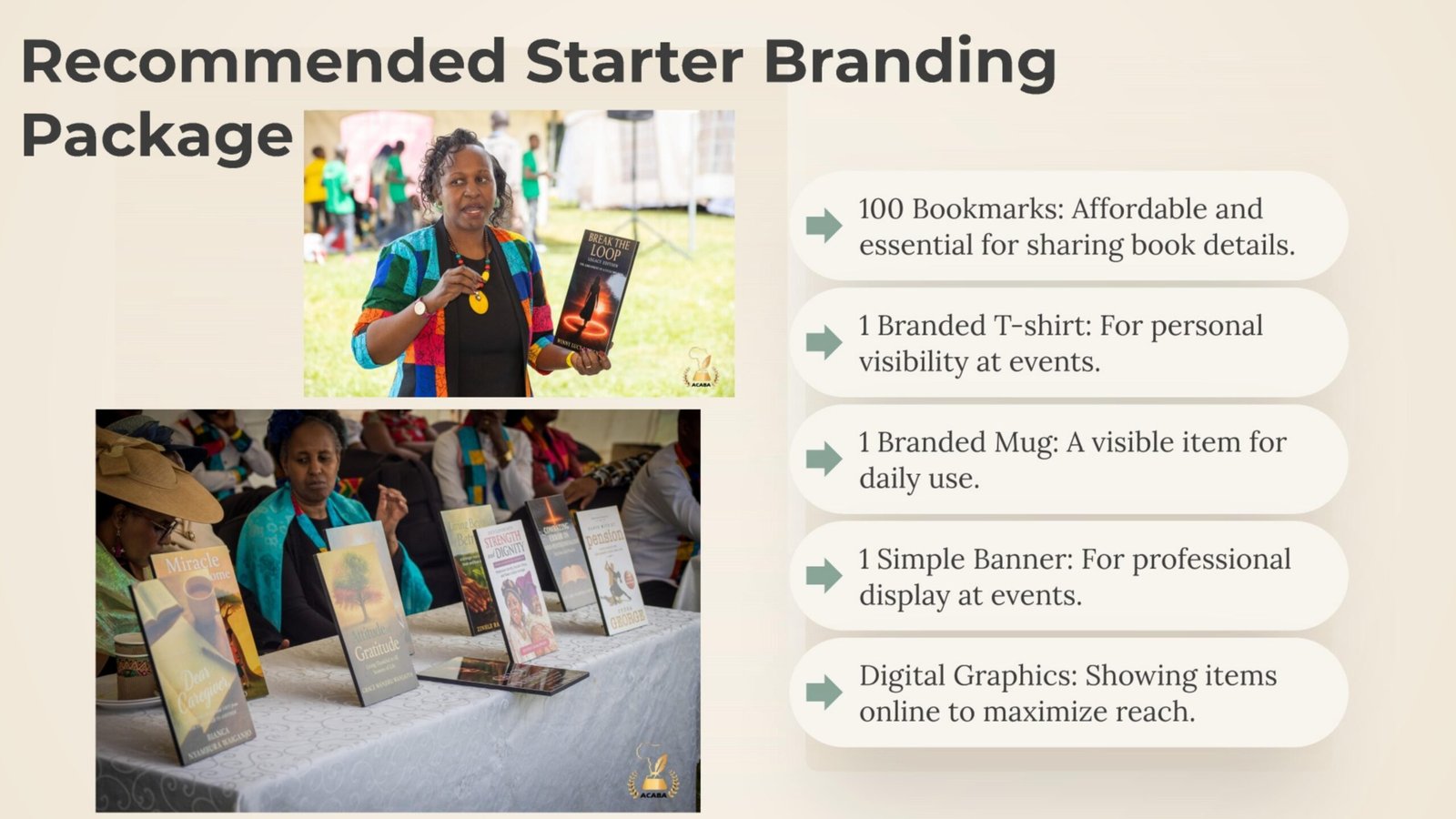
We also spent time on branding with a small budget. One of the most freeing insights for authors was that branding is not only for famous people or those with a large budget. Wisdom matters more than volume. A new author does not need to print everything at once. Starting with a few bookmarks, one branded T-shirt, one mug, and a simple banner can already create meaningful visibility. The encouragement was clear: do not print because others are printing. Print because the item supports the assignment of the book.
Building a Simple Branding Plan
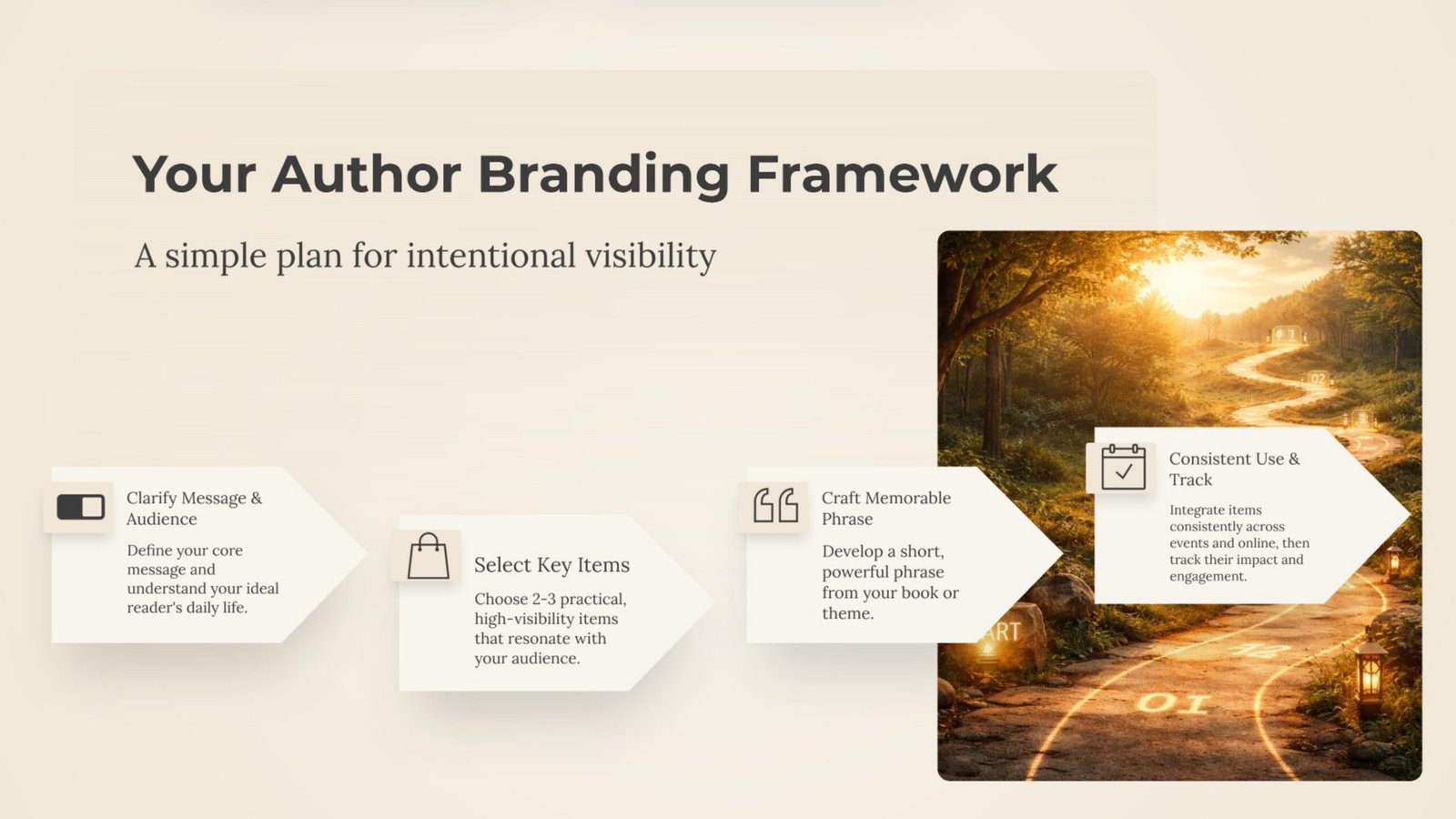
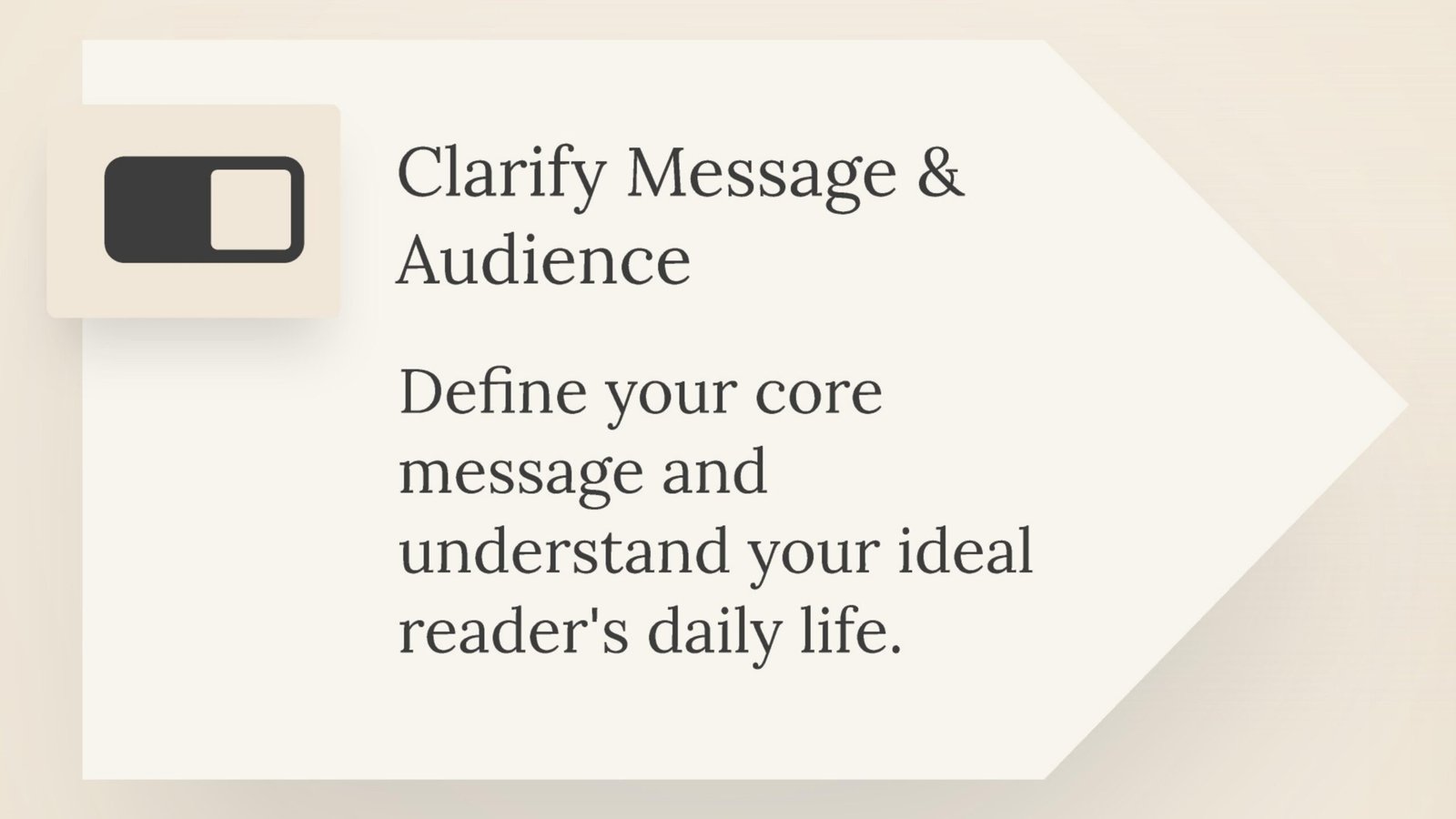
Finally, the training challenged authors to build a simple branding plan. Clarify your message. Know your readers. Choose only two or three items to begin with. Create one strong phrase. Use the items consistently at launches, trainings, social media, church events, school visits, and book fairs. Then observe what gets attention, what starts conversations, and what helps the book move further. Good branding should make the book easier to notice, easier to remember, and easier to talk about.

A Closing Reflection for Authors
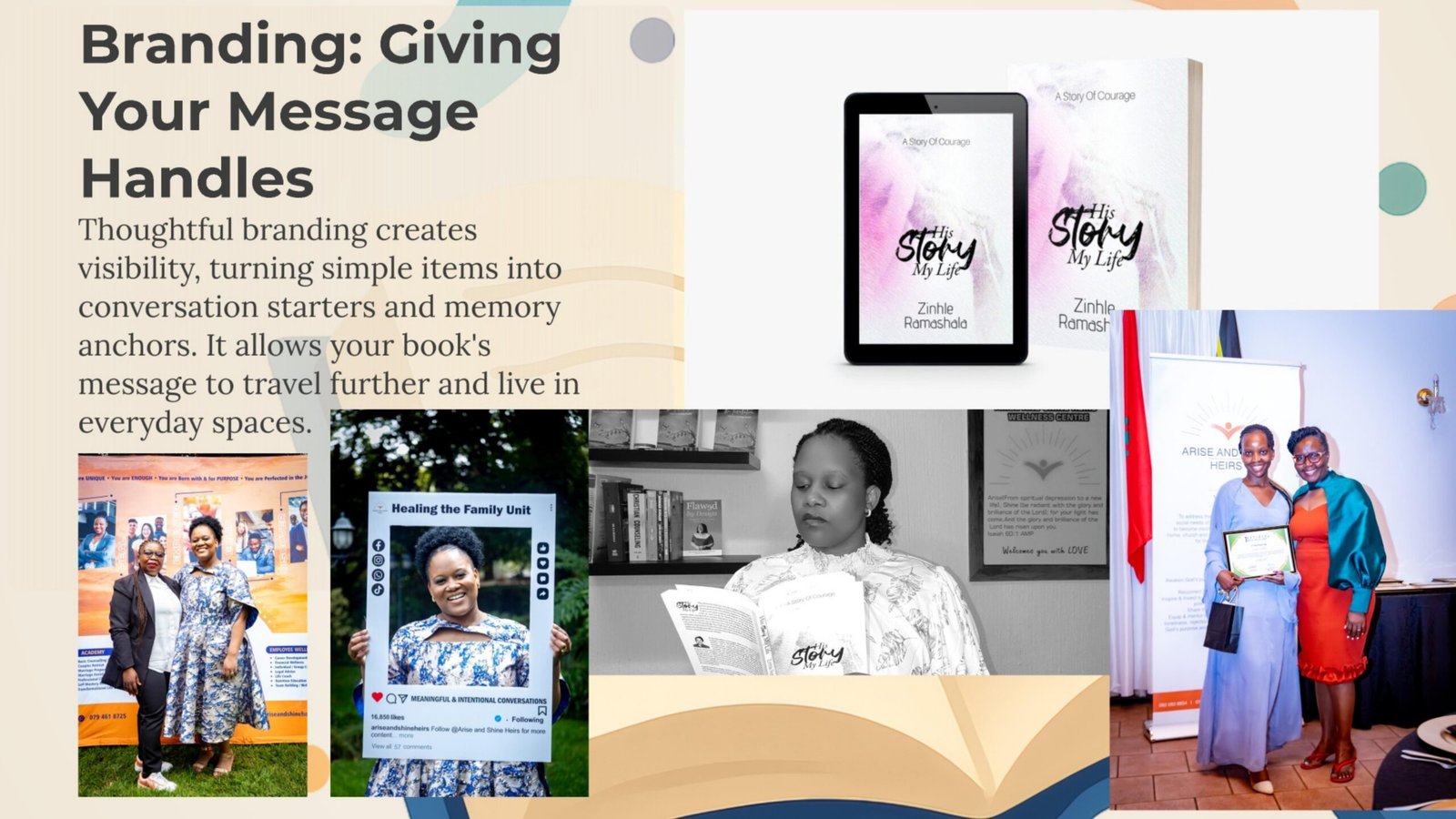
In the end, Branding the Author Beyond the Book reminded us that thoughtful visibility is not vanity. It is stewardship. It is giving the message practical handles people can hold. A book may begin in the hands of the author, but it often spreads through memory, conversation, and repeated visibility. That is why simple branded items matter. They help the message live in everyday places and keep the book in people’s minds long after the launch is over.
Final Charge
Do not just ask, “What can I print?”
Ask, “What can I create that will help my book be seen, remembered, and talked about?”
Platforms like ACABA exist not only to recognise excellence, but to cultivate it—to strengthen authors across Africa who are serious about stewarding their calling with integrity and skill.
Thank you for listening to Authors, Books & Conversations. If today’s episode sharpened your perspective on authorship and assignment, share it with a fellow writer or reader, leave us a review, and subscribe so you never miss conversations that refine both calling and craft.
Until next time, write with conviction, publish with excellence, steward your assignment faithfully—and keep reading.
Podcast Produced by: CLC Kenya
Host: Dr. Muthoni Omukhango
Subscribe for wholesome content!

Useful Links
Subscribe Now
Don’t miss our future updates! Get Subscribed Today!