Christian writers often desire to help readers enter the world of Scripture more fully. We want them to hear the voices, feel the tension, understand the setting and recognise the humanity of biblical characters.
This is especially true when writing biblical fiction, character studies, devotionals, narrative theology, sermon illustrations or creative retellings. The biblical account may give us the essential events while leaving many everyday details unrecorded. Who prepared the meal? What did the room look like? How did the character feel while waiting? What conversations may have taken place before the recorded event?
A writer naturally wants to fill some of these spaces.
There is nothing inherently wrong with doing so. Imagination can make biblical stories vivid, memorable and emotionally accessible. Historical research can illuminate customs, geography, clothing, work, family structures and political conditions. Personal interpretation can help readers consider the emotional and spiritual significance of an event.
The concern begins when the writer presents all three as though they carry the same authority.
Biblical fact, historical probability and creative interpretation are valuable, but they are not interchangeable. A responsible Christian writer should know which one is being used and help the reader recognise the difference.
This lesson focuses specifically on handling source categories within Christian writing. It complements, rather than repeats, the broader teaching on theological balance, which addresses how authors distinguish testimony from doctrine, support claims with Scripture and apply truth pastorally. (Kenya CLC)
1. Three Sources May Be Operating in One Paragraph
A single paragraph in a biblical retelling may contain three different kinds of material.
Biblical fact
This is information clearly stated or directly established in Scripture.
For example:
Ruth travelled to Bethlehem with Naomi.
This is not speculation. It is part of the biblical record.
Historical fact or reconstruction
This is information drawn from credible research about the geography, customs, agriculture, architecture, politics or daily life of the biblical world.
For example:
Travelling between Moab and Bethlehem would have required crossing difficult terrain.
The Bible records the journey, but it may not describe every aspect of the route. Geography and historical research can help the writer explain what such a journey may have involved.
Personal interpretation or creative imagination
This is the author’s attempt to imagine an unrecorded thought, conversation, motive or emotional reaction.
For example:
As Bethlehem came into view, Ruth may have wondered whether Naomi’s people would accept a foreign widow.
This is plausible, but Scripture does not tell us that Ruth had this exact thought.
All three sentences may serve the story. The problem arises only when the third sentence is written with the certainty of the first.
2. Biblical Fact: What Does the Text Actually Say?
Biblical fact must remain the foundation of any work built around Scripture.
Before developing a scene, first write down what the Bible clearly establishes. Do not begin with what you remember from sermons, films, children’s storybooks or popular Christian discussions. Return to the biblical passage.
Ask:
Who is named?
What actions are recorded?
What words are directly spoken?
What location is identified?
What sequence of events is given?
What does the passage leave unstated?
This last question is important. Silence in Scripture is not an invitation to manufacture certainty.
For example, the Bible may tell us that a person wept. It may not tell us every reason behind the tears. The writer may explore possible reasons, but should not announce one imagined explanation as the undisputed meaning of the scene.
Watch the difference
Biblical fact:
Hannah wept and would not eat.
Interpretation presented as fact:
Hannah refused to eat because she wanted her husband to understand how deeply he had failed her.
The second statement assigns a precise motive that the text does not record.
A more responsible version would be:
Hannah wept and would not eat. Perhaps the meal had become another painful reminder of the child she longed for and the rivalry she could not escape.
The word perhaps does not weaken the writing. It tells the truth about the writer’s level of certainty.
3. Historical Facts: Helpful Servants, Not Silent Masters
Historical research can enrich Christian writing tremendously. It can help readers understand matters that would have been obvious to the original audience but are unfamiliar today.
Research may illuminate:
Marriage customs
Funeral practices
Forms of work
Travel conditions
Food preparation
Clothing and jewellery
Social expectations
Political structures
Agriculture and trade
Household arrangements
Geography and climate
However, writers must use the phrase historical fact carefully.
Not everything found on the internet is a historical fact. Not every custom applied in the same way across every century, region or social group. A practice common in one part of the ancient world may not necessarily apply to every biblical character.
Historical research has different levels of certainty
Well-established historical information
This is supported by strong archaeological, geographical or documentary evidence.
For example:
The city was located along an important trade route.
General cultural background
This describes a custom known to have existed, but may not prove that a particular character personally followed it.
For example:
Marriages in the ancient Near East often involved negotiations between families.
The word often matters. It does not suggest that every marriage followed an identical procedure.
Historical reconstruction
This is an informed attempt to describe what may have happened based on available knowledge.
For example:
The family may have gathered in a central courtyard while preparations were made.
That may be historically plausible, but unless the biblical text or reliable evidence establishes it, it remains reconstruction.
Avoid turning general customs into personal biography
A writer may research common occupations for women in a certain period. That does not prove that a particular biblical woman had one of those occupations.
Similarly, learning that a region produced olive oil does not mean the writer can confidently declare:
She spent every morning pressing olives with her mother.
That is no longer historical background. It is creative biography.
It may still be used in historical fiction, but it should be recognised as imagination rather than research-proven fact.
4. Personal Interpretation: Valuable, but It Must Be Named
Personal interpretation is the meaning, emotional emphasis or possibility that the author sees within the biblical account.
Interpretation is unavoidable. Every writer makes choices about what to emphasise, where to begin, which details to connect and what lessons to draw.
The goal is not to eliminate interpretation. It is to practise it honestly.
Consider these three statements:
Naomi returned to Bethlehem after the deaths of her husband and sons.
This is biblical fact.
As a widow without sons, Naomi would have faced serious economic and social vulnerability.
This is an interpretation informed by the social world of the text.
Naomi may have felt that returning home meant admitting that her family’s journey had failed.
This is an imaginative emotional interpretation.
Each sentence has value. They simply belong to different categories.
Helpful language for personal interpretation
Writers can signal interpretation through phrases such as:
Perhaps
It is possible that
She may have felt
He may have wondered
We can imagine
The text does not tell us, but
One possible reading is
This may suggest
From a human perspective
It would not be surprising if
These phrases do not make prose timid. They prevent imagination from wearing Scripture’s name badge.
5. Creative Imagination Is Not the Enemy
Some writers become so concerned about accuracy that they drain every scene of life. Characters no longer notice anything, feel anything or speak unless every word appears directly in Scripture.
That is not necessary.
Biblical fiction and creative retellings require imagination. Without it, the author would merely copy or paraphrase the biblical passage.
The writer may imagine:
The atmosphere surrounding a recorded event
Everyday activities
Plausible conversations
Emotional responses
Sensory details
Transitions between recorded events
The effect of public events on family life
The question is not, “Did I imagine anything?”
The better questions are:
Does my imagined material contradict Scripture?
Could readers mistake it for Scripture?
Have I built a major conclusion on something I invented?
Does this imagination serve the biblical story or overpower it?
Am I giving a biblical character motives that unfairly condemn or vindicate them?
Have I preserved what Scripture clearly says?
Imagination should enter Scripture’s world as a respectful visitor, not arrive with a bulldozer and begin renovating the neighbourhood.
6. Do Not Give Biblical Characters False Certainty
One of the greatest risks in creative Christian writing is assigning thoughts and motives to biblical characters.
The Bible may record what someone did without revealing exactly why they did it. A writer may propose a motive, but should be careful not to judge the character entirely through that proposal.
For example:
He remained silent because he was jealous.
That is a firm psychological conclusion.
A more careful version might read:
He remained silent. Whether this came from jealousy, fear or uncertainty, the text does not say.
In fictional narrative, an author may choose one possibility for the sake of the story. However, the surrounding material should make clear that the book is a creative retelling, not a newly discovered biblical record.
This matters particularly when portraying:
Sexual motives
Marital conflict
Abuse
Leadership decisions
Family rivalry
Mental or emotional conditions
Unrecorded sins
Spiritual experiences
Hidden intentions
An invented motive can permanently shape how a reader views a biblical person.
7. Avoid Placing Your Theology Inside a Character’s Mouth
Writers sometimes use a biblical character to deliver a developed sermon that the character could not reasonably have spoken at that point in the biblical story.
The character suddenly explains:
The full theological meaning of the event
Later biblical developments
New Testament fulfilment
Modern psychological terminology
The author’s preferred interpretation
This may create theological and narrative confusion.
A character may reflect according to what was available within their world and experience. The author, however, can step outside the narrative and provide further reflection.
Use two distinct voices
The character’s voice
I did not understand why God had allowed the road to become so painful.
The author’s reflective voice
Readers who know the complete biblical account can see that this painful journey would eventually place her within a much larger redemptive story.
Separating these voices allows the character to remain believable while giving the author room to teach.
8. Modernisation Does Not Require Factual Confusion
Modernising biblical narratives can help readers connect with ancient characters. Contemporary language, humour and familiar emotional expressions can bring warmth and accessibility.
The issue is not whether a writer uses modern language. The issue is whether modern assumptions are quietly imported into the ancient story and presented as fact.
For example, a biblical woman may be described using a modern social or psychological category. That category may help readers understand her experience, but it may also carry meanings that do not fit the ancient context.
A writer may use modern language while remaining honest:
In today’s language, we might describe her experience as displacement.
This is clearer than writing:
She understood herself as a displaced woman suffering an identity crisis.
The first sentence is the author’s modern interpretation. The second places modern terminology directly into the mind of the character.
Modernisation works best when readers can distinguish between:
The ancient event
The modern language used to explain it
The author’s interpretation of its significance
9. Use an Author’s Note Before the Main Text
When a book contains substantial creative reconstruction, the explanation should not be hidden at the end.
A clear author’s note should appear near the beginning.
It may explain:
This book is based on biblical events and characters. The central events recorded in Scripture have been retained, while some dialogue, emotional responses, settings and connecting scenes have been imaginatively reconstructed for narrative purposes. Historical and cultural material has been drawn from research into the biblical world. Where Scripture is silent, the creative details should not be understood as part of the biblical record. Readers are encouraged to study the listed passages for the authoritative account.
Such a note does not spoil the story. It establishes trust.
Include a note appropriate to the genre
For biblical fiction
State clearly that dialogue, inner thoughts and some events are imagined.
For devotionals
Clarify when a reflection is an interpretation rather than a direct biblical statement.
For character studies
Distinguish between what the passage says and conclusions drawn from it.
For children’s retellings
Keep the story simple, but do not add invented details that teach children false biblical information.
For sermons converted into books
Review spoken illustrations carefully. What sounded obviously imaginative when delivered orally may appear factual on the printed page.
10. Give Readers the Biblical Foundation
Each chapter or section built around a biblical character should identify the principal Scripture passages.
For example:
Biblical foundation: Ruth 1–4
This gives the reader an immediate reference point.
Where the book significantly expands the story, the writer may also include a short note:
The biblical text records Ruth’s journey, work in Boaz’s field and eventual marriage. The private conversations and emotional reflections in this chapter are imaginative reconstructions.
This is particularly useful for new believers, younger readers and readers who may not know which details belong to Scripture.
11. Make the Distinction Visible in the Writing
Authors have several structural options.
Option One: Separate narrative from reflection
Present the creative retelling first, followed by a section titled:
Behind the Story
What Scripture Records
Exploring the Context
Reflections from the Passage
Where Scripture Ends and Imagination Begins
This gives the author freedom within the narrative while restoring clarity afterwards.
Option Two: Use endnotes
Endnotes can identify:
Biblical references
Historical sources
Cultural background
Areas of scholarly disagreement
Traditional interpretations
This is useful when the author wants an uninterrupted reading experience.
Option Three: Use brief introductory notes
A short note before each chapter can tell readers which elements are biblical and which are reconstructed.
Option Four: Use qualifying language within the prose
This works particularly well in non-fiction, Bible studies and devotionals.
For example:
Scripture does not tell us what she thought at that moment. However, considering the danger surrounding her, it is possible that fear and courage were present together.
12. Cite Historical Material Properly
Writers sometimes include a list of websites at the end of a chapter and assume the research is adequately supported.
A proper source system should enable the editor and interested reader to identify where a claim came from.
Record:
The author’s name
The title of the book or article
The publisher or website
The publication date where available
The relevant page number
The date accessed for online sources
The specific claim supported by the source
Avoid relying heavily on anonymous blogs, unsourced articles or websites that repeat each other.
For important claims, consult stronger sources such as:
Bible dictionaries
Bible atlases
Archaeological publications
Academic commentaries
Books by recognised historians
Peer-reviewed research
Credible museum or university resources
Primary historical documents where available
Research should increase the manuscript’s reliability, not merely decorate the page with ancient-sounding details.
13. Be Honest Where Scholars Disagree
Historical and biblical questions do not always have one universally accepted answer.
There may be disagreement concerning:
Dates
Locations
Cultural practices
The identity of a ruler
The meaning of a particular word
The chronology of events
The relationship between two passages
Do not conceal disagreement and present your preferred theory as settled fact.
Use language such as:
Scholars differ on the exact location.
One commonly proposed explanation is…
Some historians place the event within this period, although the precise date remains uncertain.
The text allows more than one possible interpretation.
Intellectual humility does not weaken Christian conviction. It demonstrates that the author respects both Scripture and the reader.
14. A Practical Four-Colour Editing Exercise
During revision, authors can temporarily highlight their manuscript using four colours.
Colour One: Biblical fact
Highlight every detail clearly recorded in Scripture.
Colour Two: Historical information
Highlight material drawn from research.
Colour Three: Interpretation
Highlight conclusions, emotional readings and suggested motives.
Colour Four: Creative imagination
Highlight invented dialogue, scenes, characters, personal histories and transitions.
Then review the pages.
Ask:
Is the reader likely to know which colour is which after the highlighting is removed?
Does imagination greatly outweigh the biblical text?
Have historical claims been sourced?
Have interpretations been presented too confidently?
Does any invented material contradict Scripture?
Have I built the chapter’s main lesson on an imagined detail?
This simple exercise can reveal why a passage feels convincing but may still be misleading.
15. From Unclear to Responsible Writing
Example One: An imagined emotion
Unclear
She was furious that God had ignored her prayers.
Better
Scripture records her distress but does not describe every thought that accompanied it. She may have wondered whether God had heard her prayers.
Example Two: Historical custom
Unclear
Every widow was required to wear black for one year.
Better
Mourning customs varied across periods and communities. In this setting, a widow may have worn distinctive garments or observed a recognised period of mourning.
Example Three: Invented dialogue
Unclear
“God has abandoned us,” she told her sister that evening.
Better in non-fiction
The Bible does not preserve their private conversations. Yet the severity of the situation allows us to imagine the kinds of questions the family may have carried.
Better in biblical fiction
The dialogue may remain, but the book should clearly identify itself as fiction or imaginative retelling before the story begins.
Example Four: Psychological motive
Unclear
He made the decision because he had always felt rejected by his father.
Better
His family history may help us consider whether earlier rejection influenced his decision, though Scripture does not state this directly.
Example Five: Modern application
Unclear
She suffered from clinical depression.
Better
Her words reveal profound grief and hopelessness. Modern readers may recognise some features associated with depression, although the biblical text does not provide a clinical diagnosis.
16. Questions for the Writer
Before finalising a chapter based on Scripture, ask:
Which details are directly recorded in the Bible?
Which details come from historical research?
Which details are my interpretation?
Which scenes, thoughts or conversations have I invented?
Have I signalled these differences clearly?
Could an unfamiliar reader mistake my imagination for Scripture?
Does any reconstruction contradict the biblical account?
Have I assigned motives the Bible does not reveal?
Have I presented a cultural possibility as a universal rule?
Are my historical sources reliable and properly cited?
Have I placed later theology or modern terminology unnaturally into the character’s voice?
Is the book’s genre clear from the beginning?
Have I invited readers back to the biblical passage?
Would removing an imagined detail cause my main lesson to collapse?
Have I treated the biblical characters with fairness, dignity and humility?
The fourteenth question is particularly important.
When the primary lesson of a chapter depends entirely upon a detail the author invented, the lesson may not be as biblically grounded as it appears.
17. A Simple Writing Formula
A helpful structure is:
What Scripture says
State the recorded event accurately.
What history helps us understand
Add relevant cultural or historical background, supported by credible research.
What we may reasonably imagine
Explore possible emotions, conversations or circumstances without claiming certainty.
What the author observes
Offer interpretation in your own voice.
What the reader can consider
Invite reflection without presenting speculation as divine revelation.
For example:
Scripture tells us that the woman travelled alone to the city. Historical knowledge of the region suggests that such travel may have exposed her to considerable physical and social risk. The text does not tell us what she thought along the way, but we may imagine that courage did not necessarily mean the absence of fear. Her journey invites us to consider what faithful action looks like when obedience carries genuine risk.
The paragraph remains vivid, reflective and applicable. Yet each layer is recognisable.
Conclusion: Write Freely, Label Honestly
Christian writers do not have to choose between accuracy and creativity.
We can write stories that breathe. We can explore emotion, culture, atmosphere and possibility. We can use modern language to help readers encounter ancient people as real human beings. We can imagine conversations, reconstruct settings and invite biblical characters onto the stage.
But we should never make imagination sound as though it was dictated by the biblical writer.
Scripture is authoritative. Historical research is informative. Personal interpretation is reflective. Creative imagination is illustrative.
Each has an important place, but each must remain in its proper place.
Responsible Christian writing does not say, “Because this is plausible, it must have happened.”
It says:
“This is what Scripture records. This is what history helps us understand. This is what I have imagined. And this is what the story invites us to consider.”
When writers maintain those distinctions, they do not diminish creativity. They give creativity a trustworthy foundation.
Getting Started: Publishing Books
Preparing to Write/Publish
Step1: Prepare Yourself to Get Published…
Are you ready to publish your book? Here is how you need to prepare. Have your manuscript ready and explore the oprions available today. If you are stuck in getting it started or finished, there is several ways to get help. Explore and get published today! #RaisingAfricanVoices
Read MoreStep2: Let’s Talk About Publishing
The self-publishing landscape has changed considerably in the past two decades with new technologies such as the Internet, and the $1 billion markets continuing to change at a rapid pace. Increasingly, there are numerous alternatives to traditional publishing, and self-publishing is becoming the first choice for writers. #RaisingAfricanVoices
Read MoreStep3: Factors to Consider Before Self Publishing
Jesus, while talking to the disciples about following Him, asked them to count the cost. The same Scripture applies to authors today - you have to count the cost from the beginning to ensure you don't stop at some point in your book project's journey. #RaisingAfricanVoices
Read MoreStep4a: Requirements for Self Publishing

Are you ready to be published? Use our 4 points check list and tick 'Published Author' box so you can move on to the next God-given assignment... #RaisingAfricanVoices
Read MoreStep4b: Publishing Steps – Review

Is your manuscript due for a review towards getting published? The major focus during manuscript review is the general quality of the book. It is important to establish the overall completeness, scope and readership of the manuscript and whether the presentation and accessibility of the book is suitable. #RaisingAfricanVoices
Read MoreElementary Skills: Publishing Books
How to Write
5a: How to Write a Book Dedication
A book dedication is a way for you, the author to bestow a high honor on a person (or a group of people) you wish to praise or otherwise spotlight. This dedication note is often short and usually focused on one person (or a specific group of people). It’s supposed to be personal, rather than professional. It goes on the dedication page, which is in the very front of the book, after the title page. Here's how to write one. #RaisingAfricanVoices
Read More5b: How to Write a Book’s Foreword
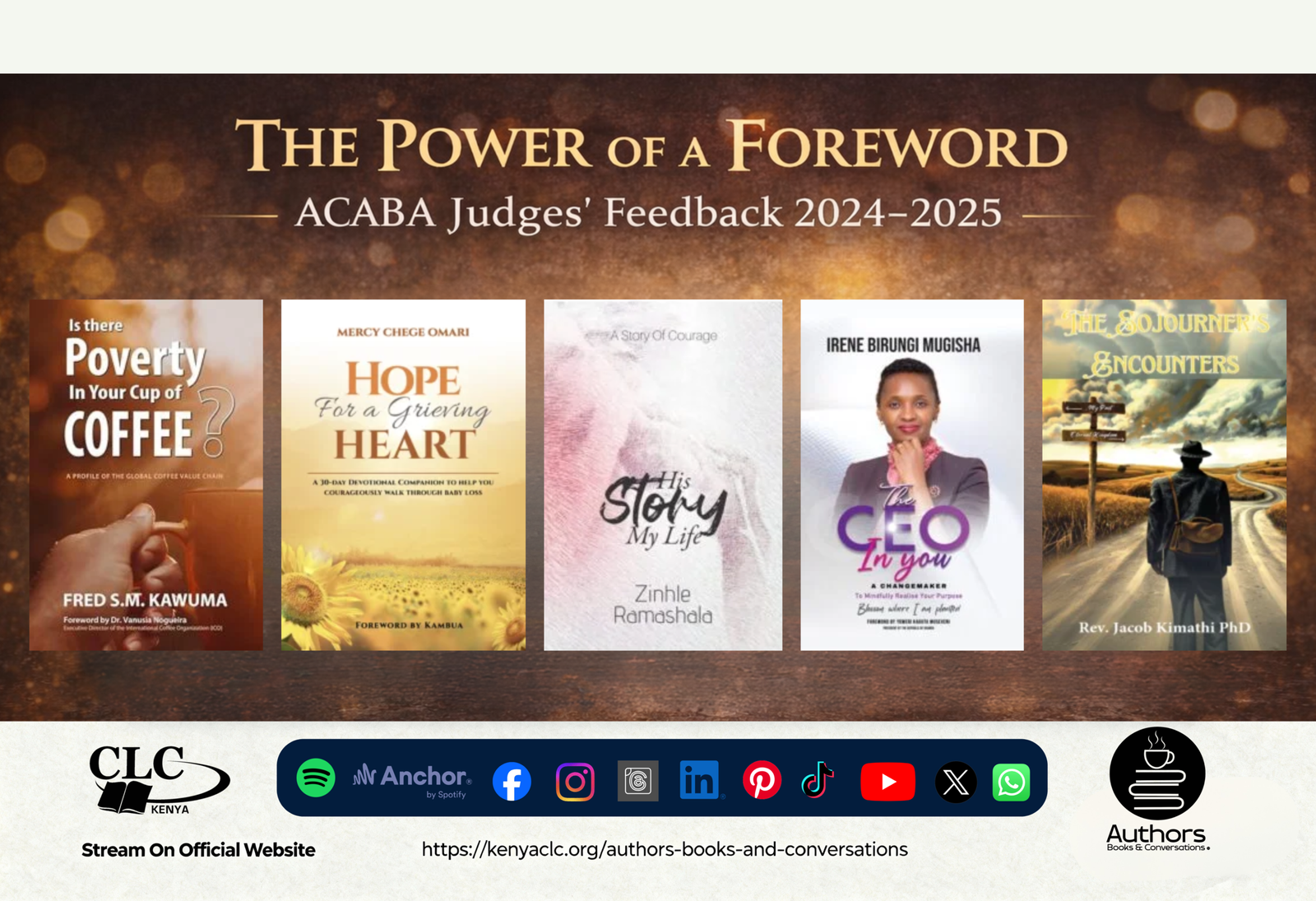
A well-written foreword can function as the ultimate third-party recommendation or endorsement for your book, generating interest and helping when it’s time to market your book. Here’s how to write one. #RaisingAfricanVoices
Read More5c: How to Write a Book Introduction
Are you stuck on writing your book introduction? Here's how to... Hook the reader right from the beginning with a personal story from your life, a funny story, a joke, or just an interesting fact that causes him/her to want to continue reading. Here’s how to write one. #RaisingAfricanVoices
Read More5d: How to Write a Book’s Conclusion
If your readers are in the conclusion chapter, it also means they read the whole book, they liked it, and now they want you to wrap it up. So don’t rash it. Give them what they want. Here’s how to write one. #RaisingAfricanVoices
Read More5e: How to Write an Author’s Bio
People are looking for reasons why they should spend their time reading what you have written. You need to instill confidence in your readers that you are knowledgeable on the subject matter by writing an appropriate bio. Here's how to write one. #RaisingAfricanVoices
Read More5f: How to Write a Book’s Blurb
A blurb is a short yet descriptive account of the book that goes on the back cover or within the book sleeve of a hardcover book. It includes any information that represents the book best and intrigues the readers and shoppers to pick the book off the shelves. Here's how to write one. #RaisingAfricanVoices
Read More5g: How to Write an Acknowledgment
An acknowledgment section in a book provides the space to go into lenghty details in thanking the people who were sources of inspiration and support for your book and life. Here'show to write one. #RaisingAfricanVoices
Read More5h: How to Write a Table of Contents
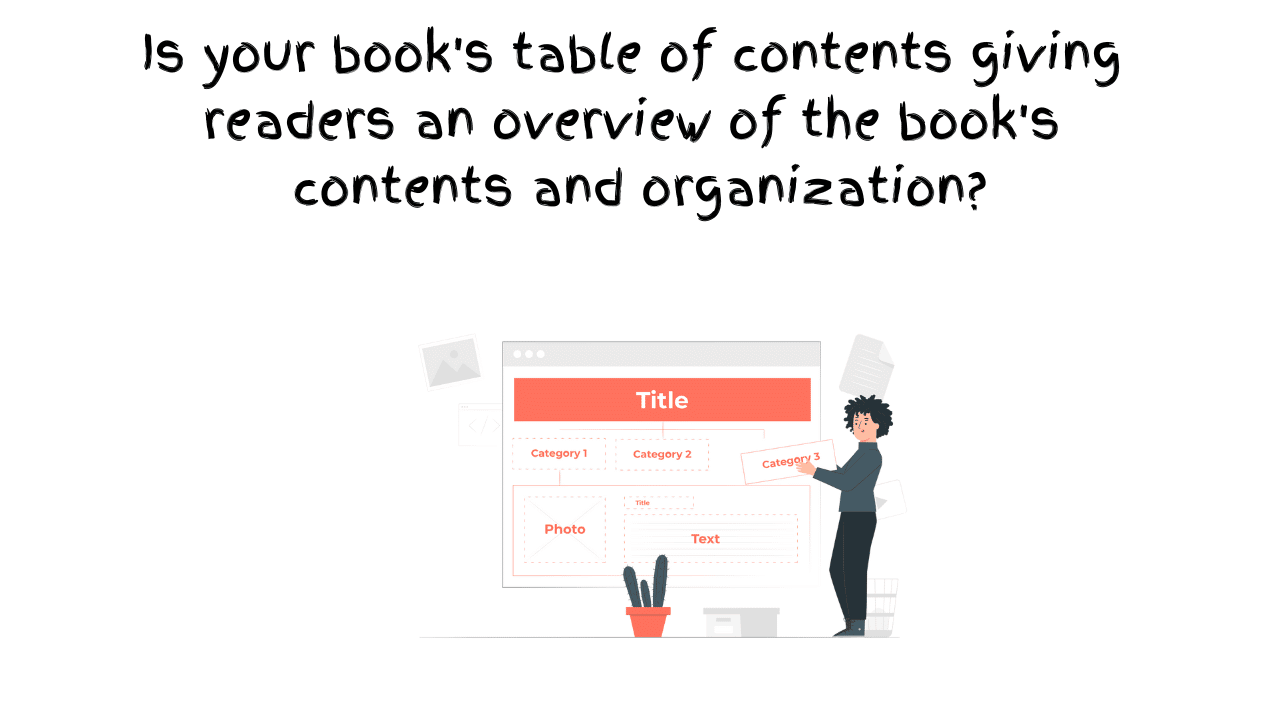
A table of content shows the things that are held or included in something. In the book industry, it is a list of the chapters or sections given at the front of a book or periodical. Here's how to write one. #RaisingAfricanVoices
Read More5i: How to Differentiate Between a Foreword and Endorsement
Foreword vs endorsement: what’s the difference? Discover their purpose, placement, length, and how each builds credibility and helps readers choose your book.
Read More5j: How to Profile Your Target Reader
Learn how to profile your target reader as an African author with simple, practical steps. This guide explains how to define your audience clearly so you can write with focus, use relevant examples, and market your book more effectively.
Read More5k: How to Start the First Sentence or Paragraph of Your Book
Practical writing tips for Christian authors on how to start the first sentence or paragraph of a book without overthinking. Learn simple opening styles, examples, and encouragement to begin your manuscript with clarity, confidence, and obedience.
Read MoreTechnical Skills: Publishing Books
Refining Your Manuscript
6a: How to Write a Devotional
A devotional book is a literary work designed to provide spiritual inspiration, guidance, and reflection for readers seeking to deepen their faith and relationship with God. Get started here. #RaisingAfricanVoices
Read More6b: How to Write a Captivating Novel

A great novel is a complex interplay of various elements, but some key components often contribute to its greatness. Get started here. #RaisingAfricanVoices
Read More6c: How to Use Dialogue in Story Writing
Effective dialogue is characterized by authenticity, clarity, and relevance to the story. It should sound natural and believable, reflecting the unique voices and perspectives of the characters. Dialogue tags, such as "said," "asked," and "replied," help identify speakers and maintain clarity in conversations. Get started here. #RaisingAfricanVoices
Read More6d: How to Use ‘Show Don’t Tell’ in Story Writing
"Show don't tell" is a fundamental principle in storytelling that encourages writers to use descriptive language, actions, dialogue and scenes to reveal information to the reader, rather than simply telling them outright. Get started here. #RaisingAfricanVoices
Read More6e: How to Elevate a Non-fiction Christian Book to Make it Personal and Engaging

Transforming a flat non-fiction Christian book into an engaging and impactful read requires authenticity and connection. Share your personal testimony, use relatable real-life examples, and offer practical applications to make your message resonate. Being vulnerable about your faith journey fosters trust, while reflective questions and actionable steps encourage readers to apply the lessons to their own lives. Get started here. #RaisingAfricanVoices
Read More6f: How to Ethically Use Other People’s Public Stories in a Non-fiction Christian Book
Using public stories in your Christian book requires integrity and respect for the individuals involved. Always seek permission where possible, give proper attribution, and ensure the story aligns with your message while preserving the dignity of those featured. Avoid embellishment or distortion for dramatic effect, and focus on presenting truth with grace. By handling stories ethically, you honour both the subjects and your readers while maintaining your credibility as a Christian author. Get started here. #RaisingAfricanVoices
Read More6g: How to overcome the challenge of mixed languages in writing a manuscript
Writing a manuscript with mixed languages can be both enriching and challenging. To overcome this, establish clear guidelines for when and how to incorporate multiple languages. Use translations sparingly and only where necessary, ensuring they don’t disrupt the reader’s flow. Consider adding footnotes or a glossary for clarity and consistency. Tools like professional editors and language experts can help refine your manuscript while maintaining cultural authenticity. Get started here. #RaisingAfricanVoices
Read More6h: How to Peer Review Fiction and Non-Fiction Christian Literature Manuscripts
Peer reviewing Christian literature requires a thoughtful approach to ensure the manuscript aligns with Biblical principles while engaging readers effectively. For fiction, focus on character development, plot consistency, and spiritual themes. For non-fiction, assess clarity, theological accuracy, and practical application. Provide constructive feedback, highlighting strengths and offering actionable suggestions for improvement. A thorough peer review not only refines the manuscript but also upholds its spiritual impact. Get started here. #RaisingAfricanVoices
Read More6i: How to Ensure Diversity and Inclusion in Christian Writing
By embracing diverse voices, ensuring equitable access for underrepresented authors, and encouraging inclusive storytelling, authors and publishers can reflect the richness of God's Kingdom. This includes actionable strategies to amplify marginalized voices, promote cultural representation, and create a more inclusive literary ecosystem. With initiatives like multilingual publishing, fair contracting, and global partnerships, CLC Kenya leads the way in advancing DEI while staying true to Biblical principles. Get started here. #RaisingAfricanVoices
Read More6j: How to Use External Source Excerpts with Footnotes and Endnotes
Many writers think footnotes and endnotes belong only in academic writing, yet they can strengthen memoir, Christian non-fiction, and reflective books too. Here is a simple guide for African writers, with practical lessons from Jesus Killed My Business.
Read More6k: How Authors Should Mention Other People in Painful Stories
Learn how authors can write about real people in painful situations with wisdom, honesty, and grace. This post explores how to change names, stay objective, avoid slander, acknowledge personal responsibility, and tell difficult stories in a way that honours truth, protects others, and reflects Christian maturity.
Read More6l: How to Turn a True Story into Autobiographical Fiction: Practical Steps for Writing Painful Personal History Well
Learn practical ways to turn a painful true story into autobiographical fiction without losing its truth or lessons. This training article helps African writers change names, settings, timelines, and identifying details wisely, especially when writing about trauma involving close relationships, while protecting people and strengthening the story.
Read More6m: How to Differentiate Repetition from Emphasis: Helping African Writers Strengthen Their Message Without Tiring the Reader
African writers must learn the difference between repetition and emphasis if they want to keep readers engaged. This training article explains how to emphasize key concepts with clarity, rhythm, imagery, placement, and development without exhausting the reader through unnecessary repetition.
Read More6n: How to Use Transition Paragraphs in Your Writing
Learn how to use transition paragraphs effectively in your writing. This concise guide for authors explains how to introduce a story smoothly, move from story to application, and end one chapter while preparing readers for the next, with simple examples for each.
Read More6o: How to Paragraph Your Manuscript Well
Learn how to paragraph your manuscript in a simple, clear way. This short guide teaches authors to keep one paragraph to one idea, avoid crowding thoughts, and use clean paragraph breaks, with easy examples for Christian writers.
Read More6p: How to Handle Theology with Balance in Christian Writing
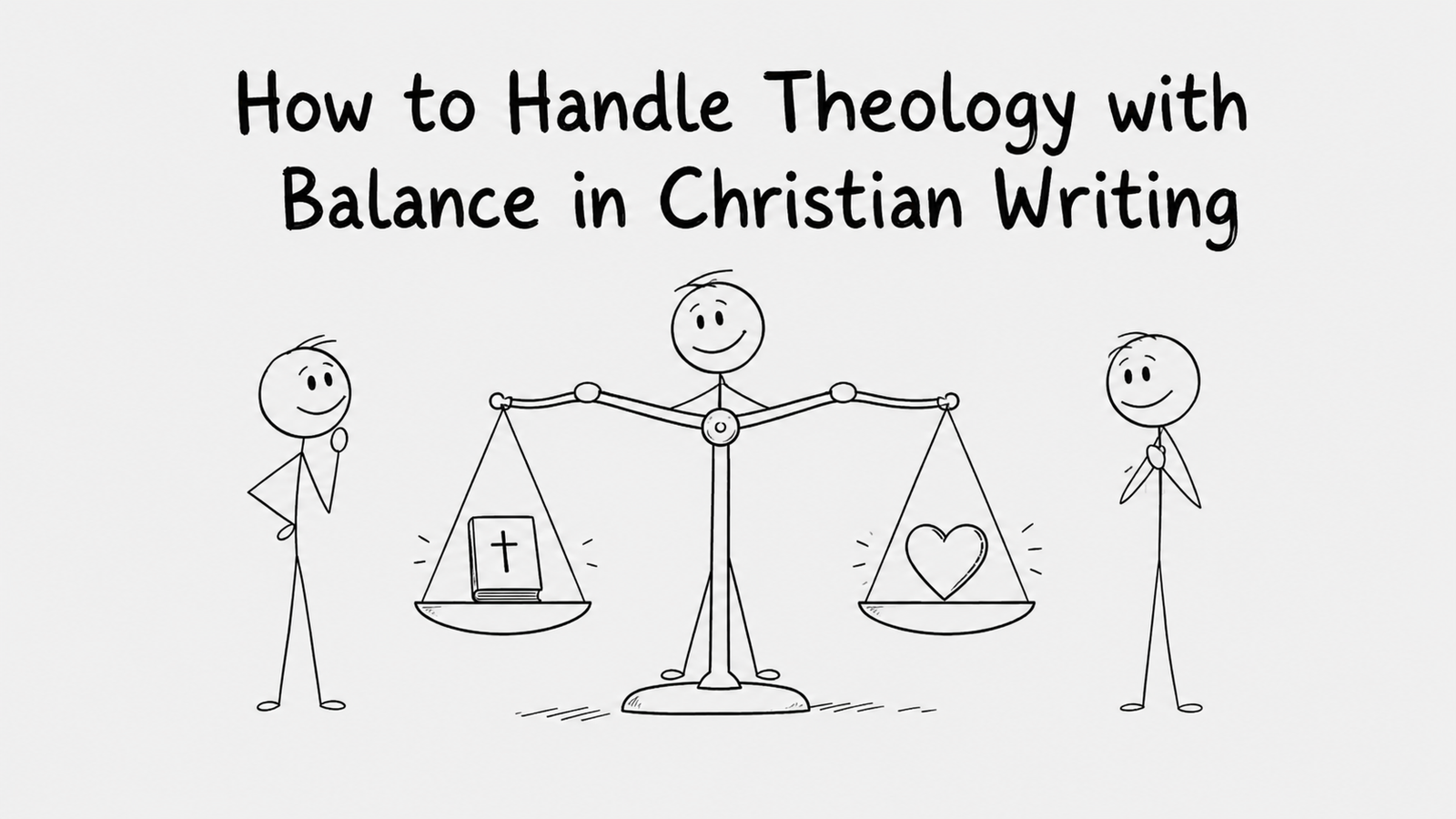
Christian authors must handle theology with both biblical truth and pastoral care. This article explains how to balance personal testimony, Scripture, exegesis, and reader application so Christian writing remains sound, compassionate, and helpful.
Read More6q: Spoken vs Written Language: Helping Authors Refine Their Voice for Book Form
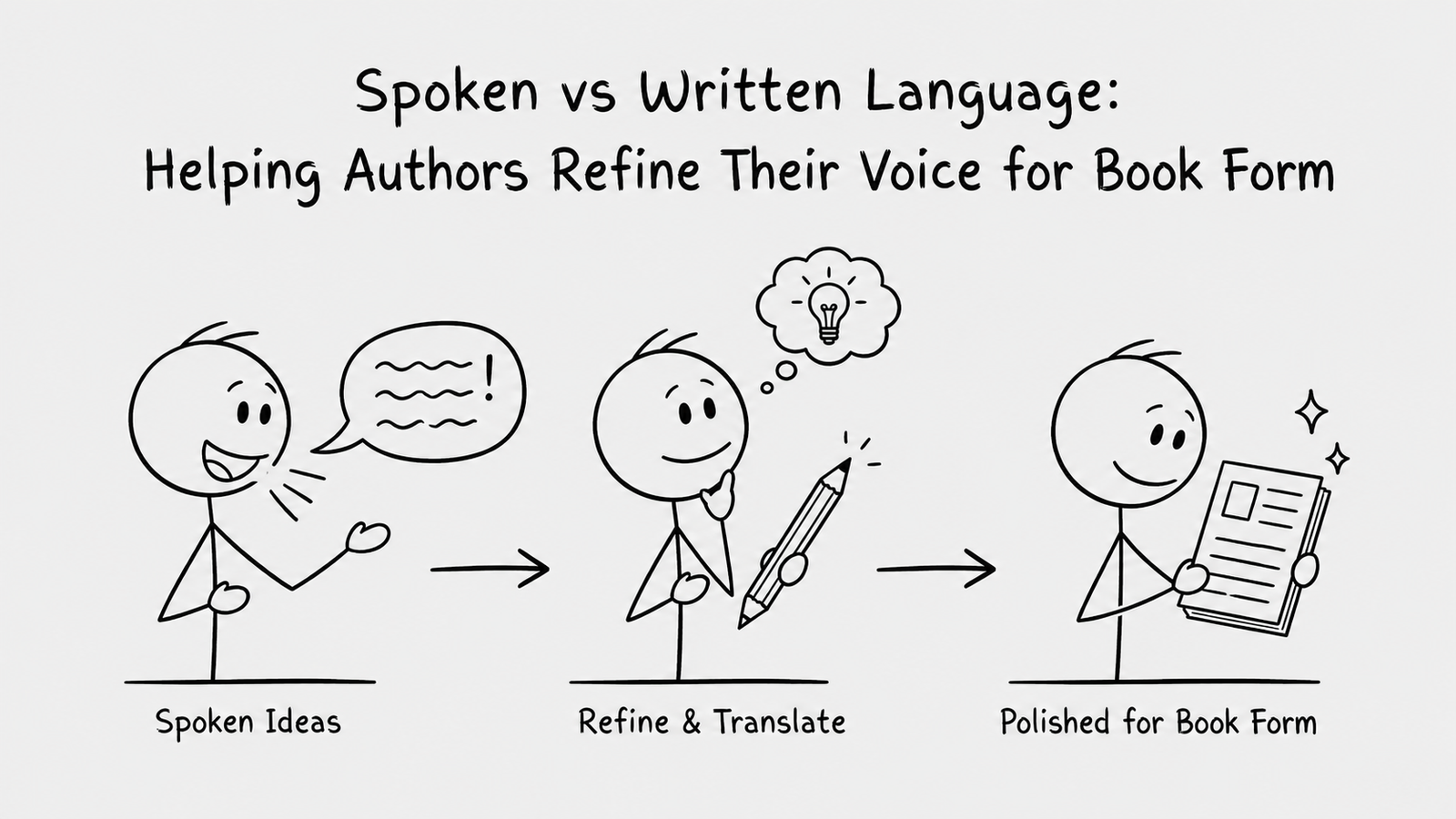
Many Christian manuscripts begin as sermons, testimonies, teachings, or spoken reflections. This article helps authors refine informal spoken language into clear, timeless book prose while preserving warmth, humour, personality, and authenticity.
Read More6r: Balancing Biblical Facts, Historical Facts and Personal Interpretation in Christian Writing
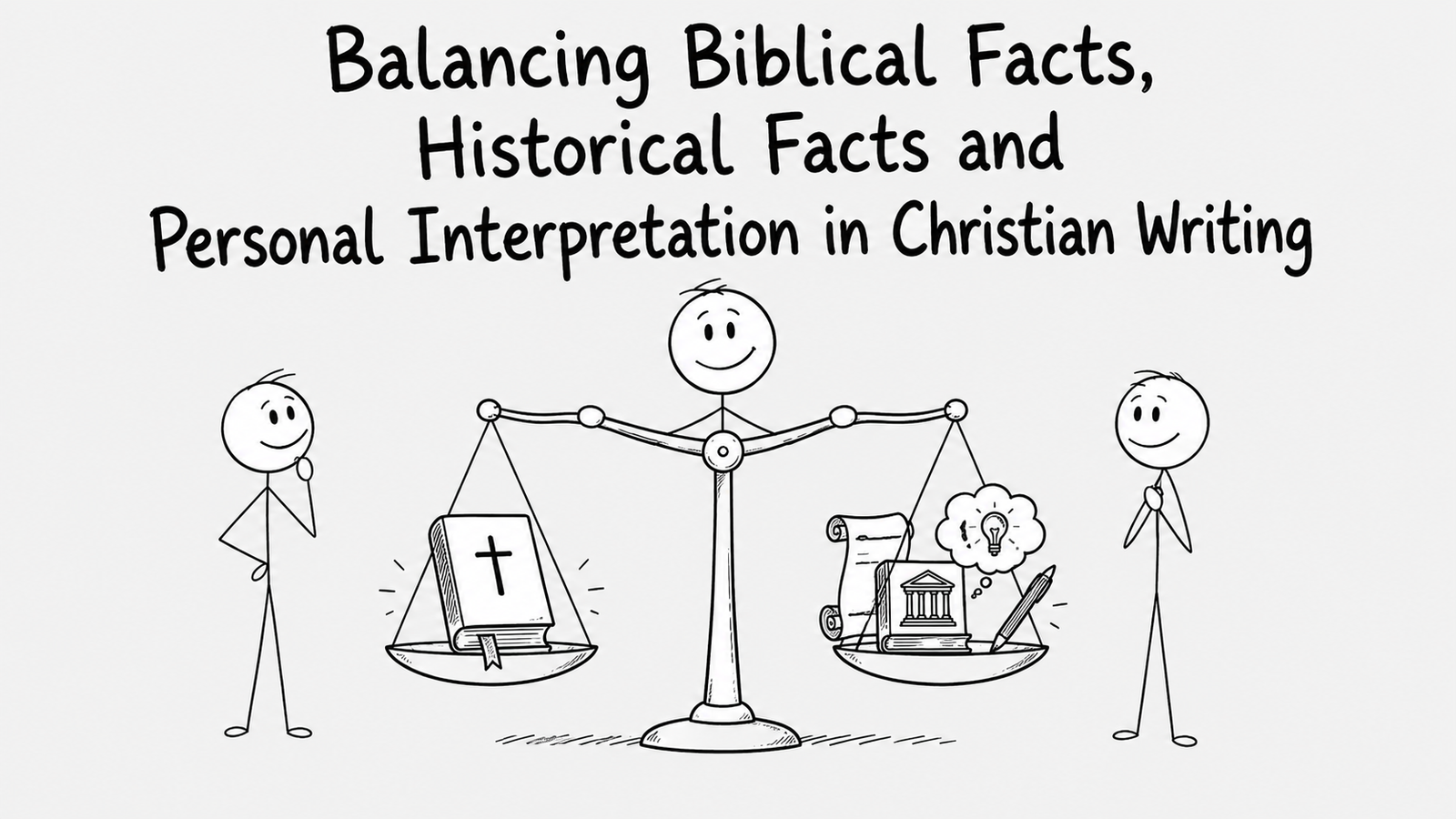
Learn how Christian writers can balance biblical facts, historical context and personal interpretation without confusing imagination with Scripture. This practical guide explains how to distinguish what the Bible records, what history supports and what the writer creatively reconstructs, while preserving both theological integrity and engaging storytelling.
Read MoreAdvanced Skills: Publishing Books

Going the Extra Mile
7a: Why Should a Non-Fiction Book Have a Subtitle?
A subtitle is a powerful tool for non-fiction books, offering clarity and appeal to potential readers. It provides additional context about the book's content, target audience, and benefits, helping it stand out in searches and on bookshelves. A well-crafted subtitle enhances discoverability, boosts SEO, and communicates your book's value in just a few words. Learn More Here. #RaisingAfricanVoices
Read More7b: Why is Organising Your Non-Fiction Into Chapters Important?
Organising your non-fiction book into clear, well-structured chapters enhances readability, engagement, and comprehension for your audience. Chapters create a logical flow, making complex ideas easier to digest while guiding readers through your message step by step. A structured layout also improves your book's professional appeal and allows readers to quickly locate topics of interest. Learn More Here. #RaisingAfricanVoices
Read More7c: Why Self-Edit Your Book Before Submitting it for Publishing?
Self-editing is a crucial step before submitting your manuscript for publishing. It allows you to refine your ideas, correct errors, and enhance the overall quality of your work. A well-edited manuscript not only demonstrates professionalism but also makes the publishing process smoother and more efficient. From grammar to flow and consistency, self-editing ensures your book is the best version of itself before reaching an editor's desk. Learn More Here. #RaisingAfricanVoices
Read More7d: Why is The Art of the Author Photo Important? Essential Specs for a Professional and Polished Image

Professional photos on a book’s back page play a crucial role in an author’s branding and marketing strategy. Learn More Here. #RaisingAfricanVoices
Read More7e. Why Professional Layout Is Non-Negotiable for African Christian Authors: Publishing With Excellence
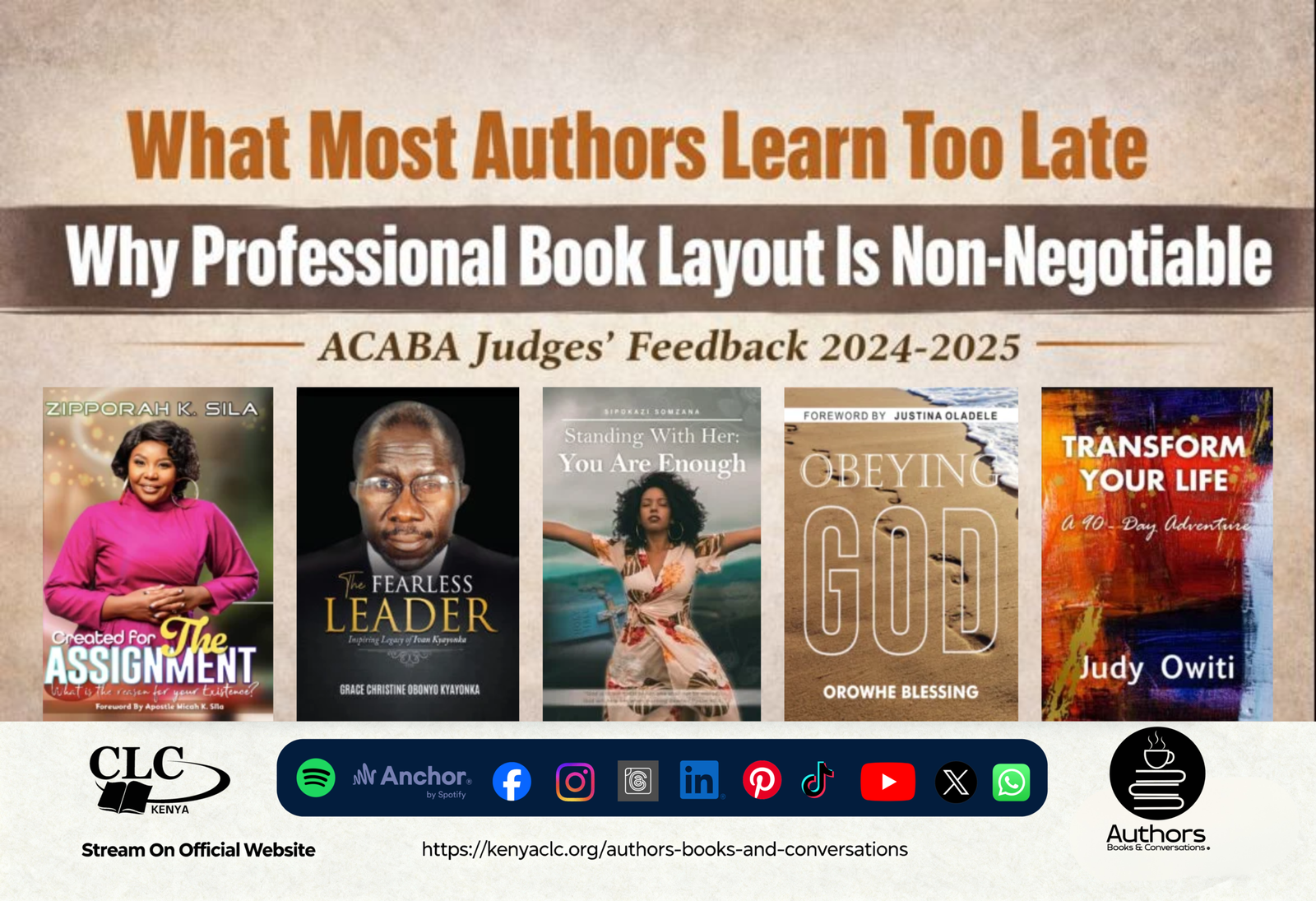
Why professional book layout is non-negotiable for African Christian authors. Learn how industry-standard layout protects your message, credibility, reader experience, and publishing excellence from manuscript to marketplace.
Read More7f: Book Covers: Why They Matter for Every Author
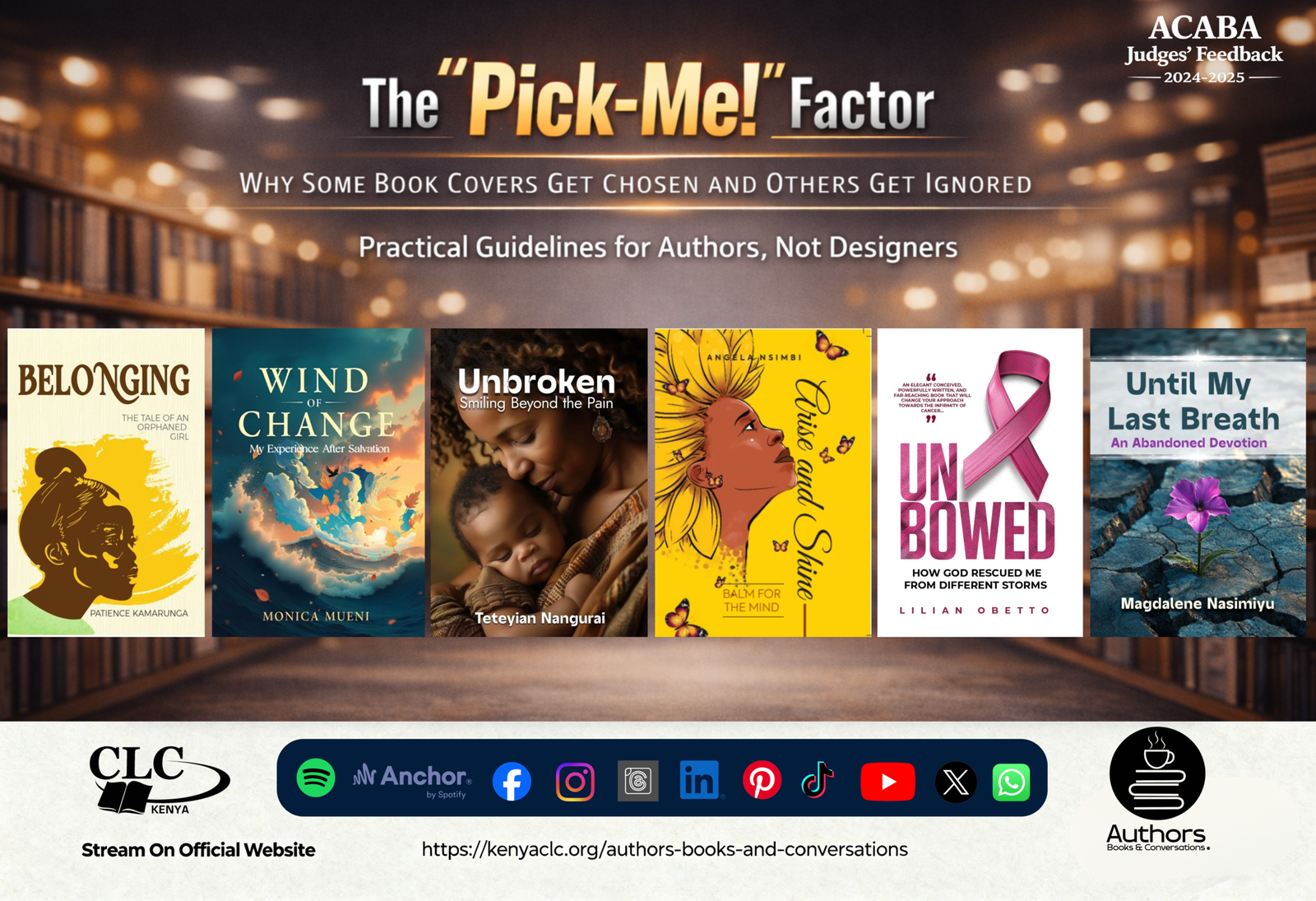
Your book cover is not decoration—it is your book’s first decision-maker. Discover why covers matter for trust, genre clarity, and sales, plus common mistakes authors can avoid and a practical checklist for creating a cover readers choose, not ignore. Learn More Here. #RaisingAfricanVoices
Read More7g: Why Consistency in Every Session Matters: Writing Workbooks Well
Learn practical workbook writing tips for African authors, with a focus on consistency in every session. Discover how clear structure, repeated formats, and reader expectations can make your workbook more engaging, professional, and effective.
Read More7c-practical1: Train Your Ears to Edit: How African Writers Can Listen to Their Manuscripts Using MS Word Read Aloud
Learn how to use MS Word’s Read Aloud feature to listen to your manuscript, catch awkward sentences, improve flow, sharpen dialogue, and edit your writing more effectively as an African author.
Read More7b-Practical1: Why a Strong Chapter Structure Matters
A well-structured chapter helps your reader follow your message with ease. This simple guide shows writers how to build a chapter that flows from introduction to teaching, story, application, reflection, and prayer.
Read MoreContractual Skills: Publishing Books
Be Informed (Not Legal Advice)
8a: Why Every Author Needs a Non-Disclosure Agreement (NDA)
Protect your intellectual property with a Non-Disclosure Agreement (NDA) in publishing! An NDA safeguards your manuscripts and creative ideas by establishing confidentiality between authors, publishers, and editors. It ensures your work isn't misused, offers legal protection, and secures your publishing journey. Learn how to prevent unauthorized use of your content, why documentation is essential, and how trusted publishers like CLC Kenya provide sample NDAs to keep your work safe. Don't let your hard work go unprotected—explore the importance of NDAs today! Here’s what you need to know. #RaisingAfricanVoices
Read More8b: What to Include in the Copyright Page and Complete the Copyrighting Process
Copyright law gives creators of original material the exclusive right to further use and duplicate that material for a given amount of time, at which point the copyrighted item becomes public domain. Here's what you need to know. #RaisingAfricanVoices
Read More8c: Terms and Conditions for Traditional Publishing/Adapting Existing Books into Other Versions

Adapting existing books into new versions, such as translations, audiobooks, or special editions, requires clear terms and conditions in traditional publishing agreements. These terms outline rights, royalties, and responsibilities for both the author and publisher, ensuring a smooth adaptation process. Properly defined agreements protect the integrity of the original work while maximising its reach and impact across different formats. Here’s what you need to know. #RaisingAfricanVoices
Read More8d: How to Publish a Book with Multiple Stakeholders: Best Practices for Rights Ownership, Expenses and Recognition
Publishing a book with multiple stakeholders requires clear communication and well-defined agreements to ensure smooth collaboration. Establish ownership rights, allocate expenses transparently, and outline recognition for each contributor's role. Best practices include drafting detailed contracts, maintaining open communication, and resolving disputes amicably. These steps protect relationships while ensuring the book's success. Here’s what you need to know. #RaisingAfricanVoices
Read More8f. How to Write a Contributor Consent Form for a Memoir Book

Publishing a book with multiple stakeholders requires clear communication and well-defined agreements to ensure smooth collaboration. Establish ownership rights, allocate expenses transparently, and outline recognition for each contributor's role. Best practices include drafting detailed contracts, maintaining open communication, and resolving disputes amicably. These steps protect relationships while ensuring the book's success. Here’s what you need to know. #RaisingAfricanVoices
Read More8e: How to Get ISBN in Kenya and Other African Countries
Publishing a book with multiple stakeholders requires clear communication and well-defined agreements to ensure smooth collaboration. Establish ownership rights, allocate expenses transparently, and outline recognition for each contributor's role. Best practices include drafting detailed contracts, maintaining open communication, and resolving disputes amicably. These steps protect relationships while ensuring the book's success. Here’s what you need to know. #RaisingAfricanVoices
Read More8f: How to Ethically and Legally Use Free or Unpaid Images in Your Book

Learn how to use free images for your book ethically and legally by checking licences, reading the fine print on sites like Unsplash and Freepik, and knowing when paid or AI-generated images are the wiser choice.
Read MoreSubscribe for wholesome content!