- Home
- Authors, Books & Conversations
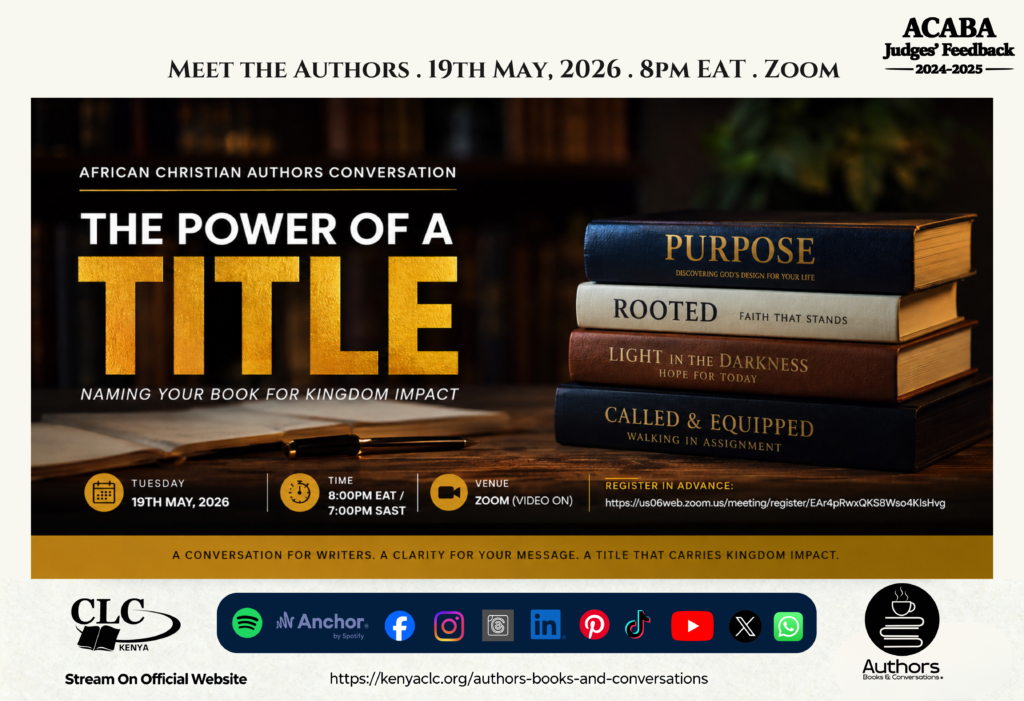
- Power of a Title: Naming Your Book for Kingdom Impact
Featuring: Doris Mitti (Uganda), Jemimah Nzola (Kenya), Tsholofelo Zion (Zimbabwe), Dennis Makau (Kenya), Joyhope Kingangi (Kenya), Abraham Kimathi (Kenya), David Obonyo (Kenya), Rahab Macharia (Kenya), and Gladys Juma (Kenya)
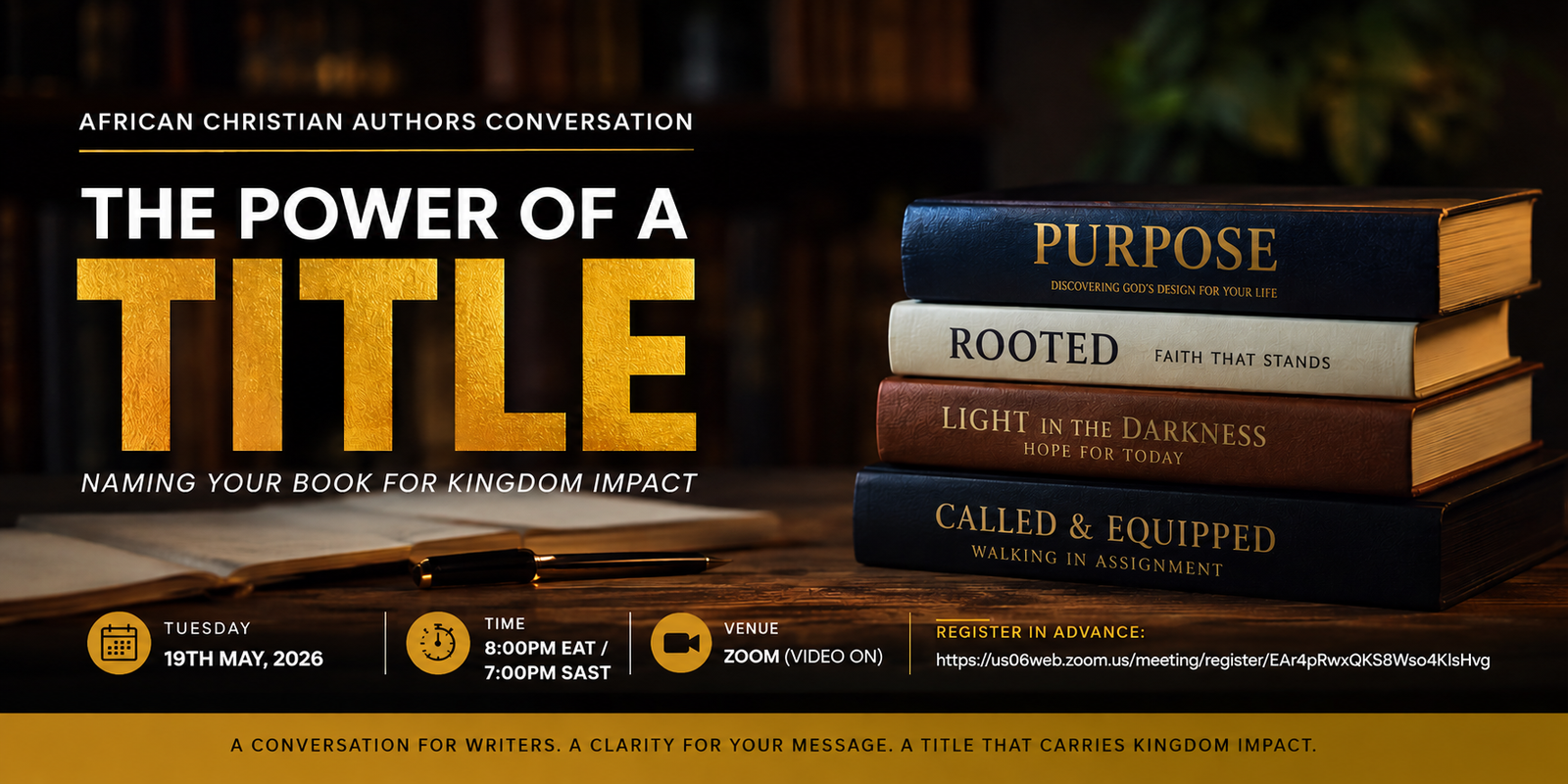
Register in Advance
Registration closes 1 minute to the set time on the D-day.
Register on ZoomTip: If you don’t see the email, kindly check Promotions/Spam.
Authors, Books & Conversations
The Power of a Title
A book title is more than a name on a cover. It is the first invitation, the first impression, and often the first sermon your book preaches before a reader opens the first page.
Whether you are a new author or a seasoned writer, this conversation will help you think practically about author branding, message visibility, and how to create memorable connections that make your books easier to notice, remember, and talk about.
Ready to explore the training content?
Jump to the content below and continue the conversation from there.
Watch below
Click the poster to start the video player
Well Branded Books
The Power of a Title: Naming Your Book for Kingdom Impact.
EPISODE SPONSORS
Today’s episode is proudly sponsored by CLC Kenya.
Welcome to Authors, Books & Conversations by CLC Kenya
the podcast that celebrates the power of storytelling, the beauty of literature, and the impact of Christian authorship. I am your host, Dr. Muthoni Omukhango, and I am delighted to take you on a journey through some of the most inspiring books featured in the African Christian Authors Book Award (ACABA).
Today’s conversation is both creative and deeply strategic. We are talking about books, yes — but even more specifically, we are talking about one of the most powerful parts of a book before anyone reads the first page: the title.
Our theme is: The Power of a Title: Naming Your Book for Kingdom Impact.
In this conversation, we will be hearing from authors whose book titles have sparked curiosity, stirred emotion, opened conversations, carried conviction, and helped position their message clearly to readers across different spaces and audiences.
Now, this is where the conversation becomes especially important. Writing a powerful book matters — but sometimes a reader encounters the title long before they encounter the content. A title can determine whether someone pauses, asks questions, remembers the book, shares it, or overlooks it completely.
In today’s world, authors must think carefully about how they name their books because titles are no longer just labels. They are invitations. They are positioning tools. They are conversation starters. And sometimes, they become the doorway through which readers encounter healing, truth, discipleship, encouragement, or conviction.
So today we will be exploring what it means to create book titles that are clear, memorable, meaningful, and aligned with the heart of the message:
How do you choose a title that reflects the burden and assignment behind your book?
How do you balance creativity, clarity, curiosity, and spiritual depth?
What makes a title memorable without becoming exaggerated or misleading?
How do authors know when a title is carrying the right emotional and spiritual weight?
And how can authors avoid titles that sound confusing, generic, forgettable, or disconnected from the actual message of the book?
Because a title is not merely decoration on a cover. It is often the first voice of the book. It shapes expectation. It frames perception. It helps readers decide whether the message is relevant to them.
And let us be honest: many powerful books remain hidden because their titles fail to communicate the strength of the message inside. Meanwhile, some titles immediately provoke thought, awaken emotion, create intrigue, or position the book clearly in the mind of the reader.
This session is here to provide practical wisdom, creative insight, and thoughtful reflection for authors who want their titles to carry both excellence and Kingdom purpose.
Stay with us as we unpack this important conversation with authors who are learning how to name their books intentionally, strategically, and meaningfully for lasting Kingdom impact.
Now, let’s dive in.
“A book may carry the message, but the title helps the reader notice it, remember it, and respond to its Kingdom assignment.”
ACABA by CLC Kenya is a program that recognises, celebrates and promotes African Christian authors whose works inspire, equip, and transform lives. Each year, a panel of judges carefully evaluates submissions based on originality, Biblical alignment, relevance, and literary excellence. In this special episode, we will review five outstanding books, highlighting their impact and the judges’ feedback. Join me as we dive into these literary treasures!
African Books With Powerful Book Titles
Why Are African Books & Conversations Important Today?
African books and the conversations surrounding them are more important than ever in today’s world to Preserve and Celebrate African Stories: For centuries, Africa’s rich oral traditions, history, and wisdom have been passed down through storytelling. Now, books serve as an extension of that legacy, capturing authentic African experiences and ensuring they are not lost. African literature provides a unique lens through which we understand our past, navigate our present, and shape our future as we draw our continent to God!
tags : Book Branding, Award Winners, African Books, ACABA Judges Feedback, Great Reads
socials :
Why This Conversation Matters
In a world where thousands of books compete for attention every day, writing a powerful manuscript is only part of the journey. Before readers experience the content, they usually encounter something else first: the title. That was the heart of our recent Authors Training & Empowerment conversation on The Power of a Title: Naming Your Book for Kingdom Impact.
Looking Beyond “Just a Name”
This session was designed to help authors think beyond titles as mere labels and begin seeing them as strategic, spiritual, and communicative tools. A title is often the first sermon the book preaches. It shapes first impressions, sparks curiosity, frames expectation, and influences whether a reader pauses or keeps scrolling. We explored how titles can carry atmosphere, assignment, emotion, conviction, healing, warning, hope, or invitation long before the first chapter begins.
Why Titles Matter
One of the strongest truths from the training was this: readers often decide whether to notice a book before they ever read a single paragraph. A title can either invite the reader closer or quietly push them away. In many cases, powerful books remain hidden because the title does not communicate the strength of the message inside. Meanwhile, some books immediately create intrigue, emotional connection, or clarity simply because the title is memorable and meaningful.
A strong title increases visibility because it stands out. It increases memory because people can recall it easily. And it increases conversation because a compelling title naturally makes people ask questions, repeat it, recommend it, or discuss it with others.
What Makes a Strong Title
A major part of the training focused on what makes a title effective. We explored how strong titles are usually clear, emotionally resonant, relevant to the message, and easy to remember. Good titles often create one of three responses: curiosity, recognition, or conviction.
Some titles work because they ask an emotional question. Others work because they make a bold statement. Some carry mystery. Others offer clarity and immediate understanding. The key lesson was simple: a title should not confuse the reader about the heart of the message.
We also reflected on how titles should align with both audience and assignment. A devotional title may need warmth and invitation. A prophetic book may require urgency or confrontation. A children’s book may need playfulness and memorability. A leadership or finance book may require clarity and authority. Different books require different title strategies.
From Creativity to Clarity
Another important discussion centred on balancing creativity with clarity. Many authors are tempted to create titles that sound impressive but leave readers unsure what the book is actually about. Others become too descriptive and lose emotional power. The training encouraged authors to avoid both extremes.
We explored how the most effective titles are often simple enough to remember but meaningful enough to carry weight. Sometimes one strong phrase is more powerful than a complicated sentence. Sometimes a subtitle helps clarify the direction of the book. Sometimes shortening a title strengthens its impact rather than weakening it.
The conversation also challenged authors to ask practical questions:
Would someone remember this title tomorrow?
Would this title naturally start a conversation?
Does the title reflect the actual message of the book?
Does it sound alive, meaningful, and purposeful?
Would a reader feel curious enough to pick up the book?
The Emotional Power of Titles
One especially practical section focused on emotional resonance. Readers are often drawn to titles because they feel seen, understood, challenged, or inspired by them. A title can awaken pain, hope, identity, purpose, fear, healing, or conviction in only a few words.
Titles such as Choose to Forgive, He Calls Me Mama, MAXIMIZING MANHOOD, and When Mama Prays immediately communicate emotional and spiritual atmosphere. They already begin speaking before the reader opens the book.
The session reminded authors that titles should not merely sound intelligent. They should connect.
Avoiding Common Mistakes
Authors were also cautioned against common title mistakes. Some titles are too vague and difficult to remember. Others are overly long, complicated, or disconnected from the actual content of the book. Some titles imitate trends without authenticity, while others try too hard to sound deep and end up sounding confusing.
One of the strongest cautions from the training was this: do not choose a title merely because it sounds fashionable. Choose a title because it faithfully carries the burden and assignment of the message.
Naming with Kingdom Purpose
We also reflected on the spiritual side of naming books. Throughout Scripture, names carried meaning, identity, prophecy, and assignment. In the same way, authors were encouraged to approach titles prayerfully and thoughtfully rather than casually.
A title should not merely attract attention. It should support the mission of the message. It should help the right readers recognise that the book is speaking to them.
As one quote from the session captured beautifully:
“A book may carry the message, but the title helps the reader notice it, remember it, and respond to its Kingdom assignment.”
Building a Strong Title Strategy
Finally, the training encouraged authors to build a simple title strategy:
Clarify the core burden of the book
Identify the emotional response you want to create
Understand your audience clearly
Test multiple title options
Seek honest feedback
Pray through the naming process
Aim for both memorability and meaning
Good titles make books easier to notice, easier to remember, easier to recommend, and easier to discuss.
Because ultimately, a title is not just a marketing tool. It is a doorway into the message.

A Closing Reflection for Authors
In the end, The Power of a Title: Naming Your Book for Kingdom Impact reminded us that a title is not a small detail added at the end of the writing process. It is part of the stewardship of the message itself. A title becomes the doorway through which readers first encounter the burden, atmosphere, and assignment of a book. Long before people read chapters, they often respond to a name.
A strong title does more than sound good. It helps the message travel. It creates recognition, sparks curiosity, invites conversation, and helps readers remember what the book carries. Some titles comfort. Some confront. Some awaken conviction. Some create hope. But all meaningful titles help position the message where it can be noticed, understood, and shared.
That is why titles matter. They help books move from shelves into conversations, from curiosity into impact, and from pages into people’s lives.
Final Charge
Do not just ask, “What sounds creative?”
Ask, “What title faithfully carries the burden, purpose, and assignment of this book?”
Do not merely choose titles that impress people.
Choose titles that communicate clearly, connect deeply, and serve the message with integrity.
Platforms like ACABA exist not only to recognise excellence, but to cultivate it — strengthening authors across Africa who are serious about stewarding their calling with wisdom, clarity, creativity, and Kingdom purpose.
Thank you for listening to Authors, Books & Conversations. If today’s episode sharpened your understanding of titles, message positioning, and authorship, share it with a fellow writer or reader, leave us a review, and subscribe so you never miss conversations that refine both calling and craft.
Until next time, write with conviction, title with wisdom, publish with excellence, steward your assignment faithfully — and keep reading.
Podcast Produced by: CLC Kenya
Host: Dr. Muthoni Omukhango
Subscribe for wholesome content!

Useful Links
Subscribe Now
Don’t miss our future updates! Get Subscribed Today!